🇨🇱🇪🇸 Los nacimientos de los proyectos automotrices son una caja de Pandora. Supongo que por eso me fascinan tanto.
No todos nacen buscando tiempos de vuelta, cifras de potencia absurdas o aceleraciones imposibles. Muchos parten desde algo más simple:
una solución, una necesidad, una herramienta de trabajo, una forma de salir adelante.
No todos nacen buscando tiempos de vuelta, cifras de potencia absurdas o aceleraciones imposibles. Muchos parten desde algo más simple:
una solución, una necesidad, una herramienta de trabajo, una forma de salir adelante.
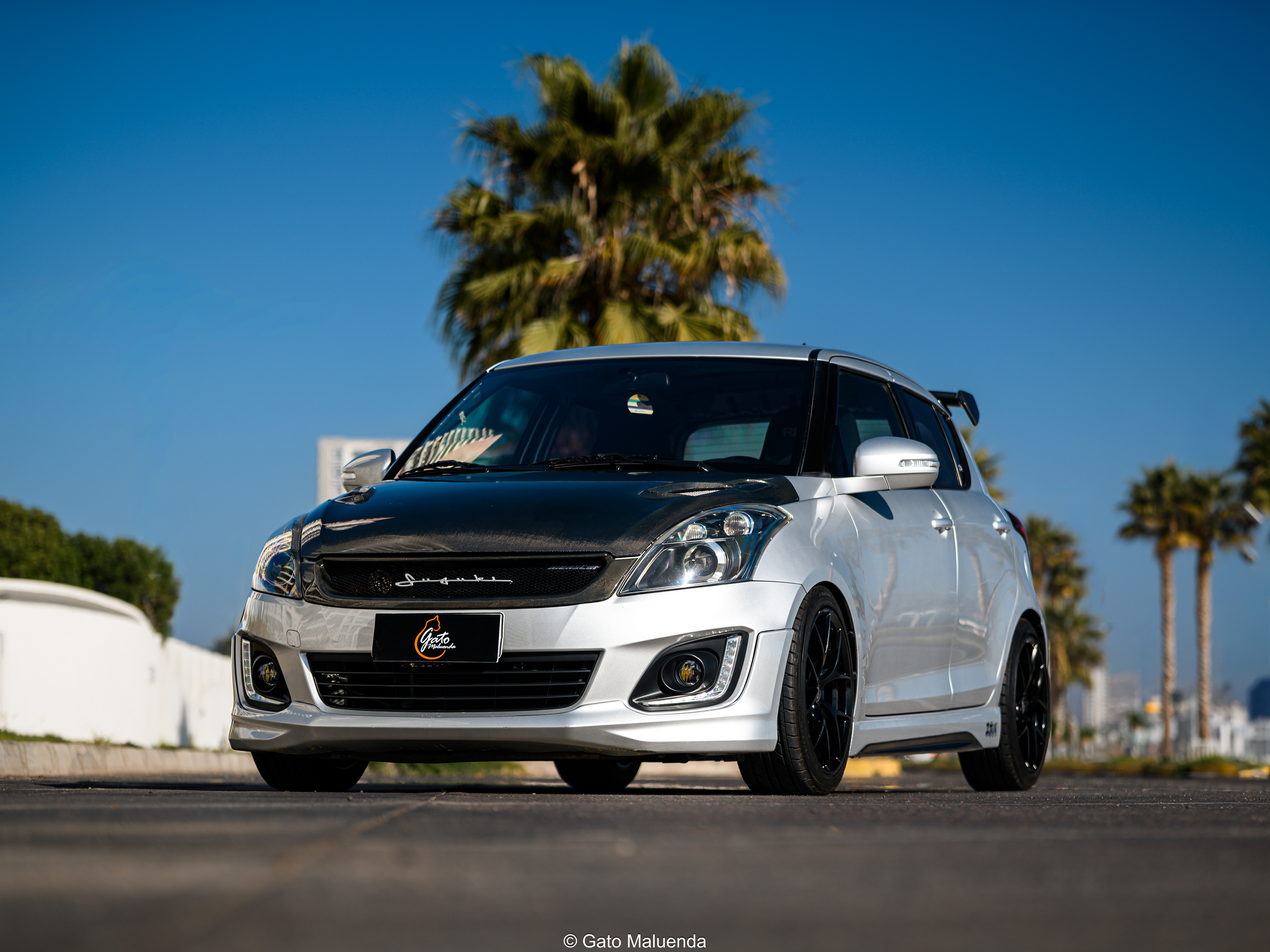
Así es como este Suzuki Swift GLX llegó a manos de su dueño en plena pandemia. Fue comprado en Los Andes, a su único propietario,
con solo 18.000 kilómetros recorridos. El plan original no tenía absolutamente nada que ver con pistas, preparaciones ni modificaciones.
El plan era bastante más normal, más rutinario: trabajar como Uber durante una de las épocas más complicadas que hemos vivido en la actualidad.
con solo 18.000 kilómetros recorridos. El plan original no tenía absolutamente nada que ver con pistas, preparaciones ni modificaciones.
El plan era bastante más normal, más rutinario: trabajar como Uber durante una de las épocas más complicadas que hemos vivido en la actualidad.
¿Y cómo no? Era un auto económico, confiable, fácil de mantener y bien equipado. Un hatchback nacional, de origen japonés,
con motor K12B 1.2 litros naturalmente aspirado, caja manual de cinco velocidades y una receta sencilla: bajo consumo, fiabilidad y practicidad.
con motor K12B 1.2 litros naturalmente aspirado, caja manual de cinco velocidades y una receta sencilla: bajo consumo, fiabilidad y practicidad.
Pero los autos a veces se quedan por razones que no aparecen en ninguna ficha técnica, ni responden demasiado a la lógica.
Con el tiempo llegó un trabajo estable, la familia creció y la necesidad de algo más espacioso instaló la idea de venderlo en la cabeza de su dueño.
Más de una vez estuvo muy cerca de irse, pero su familia ya le había tomado cariño. Su señora y su hijo siempre terminaban frenando la venta.
La contrapropuesta fue simple: el Swift se quedaba, pero se transformaba.
Más de una vez estuvo muy cerca de irse, pero su familia ya le había tomado cariño. Su señora y su hijo siempre terminaban frenando la venta.
La contrapropuesta fue simple: el Swift se quedaba, pero se transformaba.
Y con ello comenzó el viaje.
Lo que partió como una visual más deportiva fue tomando una dirección mucho más clara y agresiva, con una inspiración específica:
el Monster Sport Swift RS N1. El objetivo era mantener piezas originales, de alta calidad, reducir peso lo más posible y
construir un auto con una identidad funcional, no simplemente estética.
el Monster Sport Swift RS N1. El objetivo era mantener piezas originales, de alta calidad, reducir peso lo más posible y
construir un auto con una identidad funcional, no simplemente estética.
Hoy el auto pesa 880 kg medidos, más de 100 kg menos que su peso original, cercano a la tonelada.
Su motor sigue siendo el pequeño K12B 1.2 naturalmente aspirado, pero actualmente entrega 115 hp a 6.200 rpm y 150 Nm de torque,
cifras medidas en banco. No son números estratosféricos. No buscan impresionar a nadie en una junta.
Pero en un auto tan liviano como este, empiezan a contar otra historia.
Su motor sigue siendo el pequeño K12B 1.2 naturalmente aspirado, pero actualmente entrega 115 hp a 6.200 rpm y 150 Nm de torque,
cifras medidas en banco. No son números estratosféricos. No buscan impresionar a nadie en una junta.
Pero en un auto tan liviano como este, empiezan a contar otra historia.
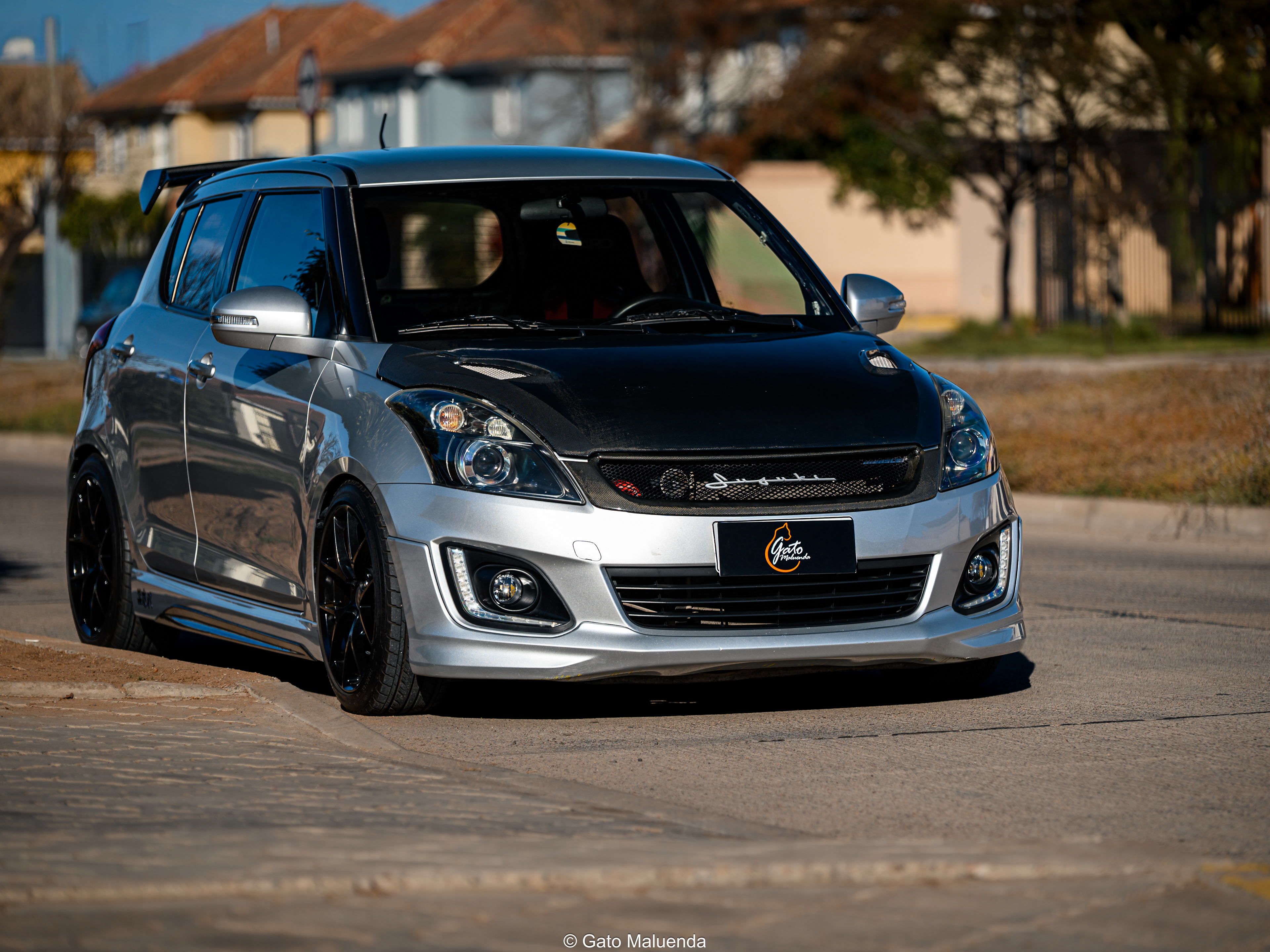
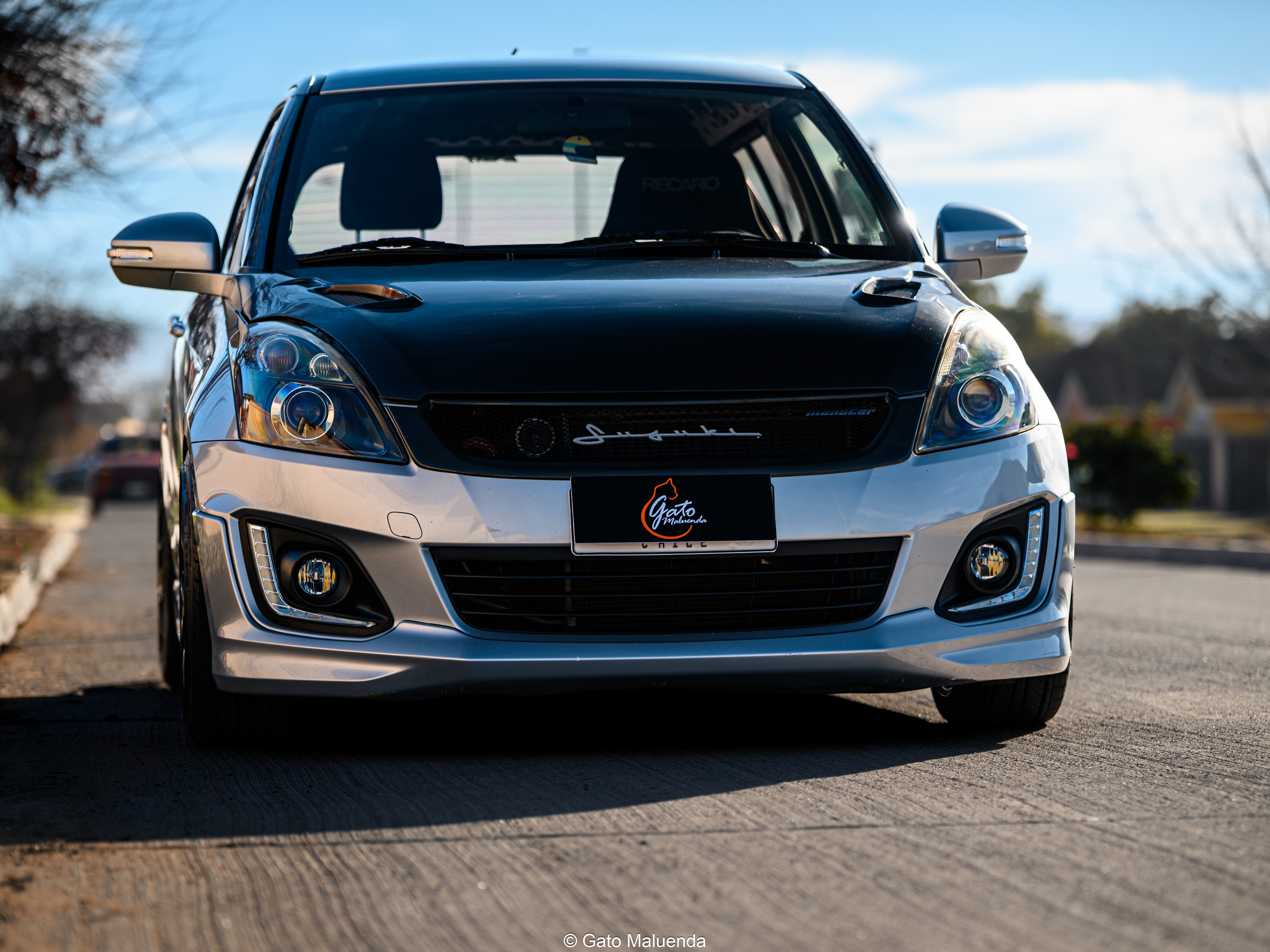
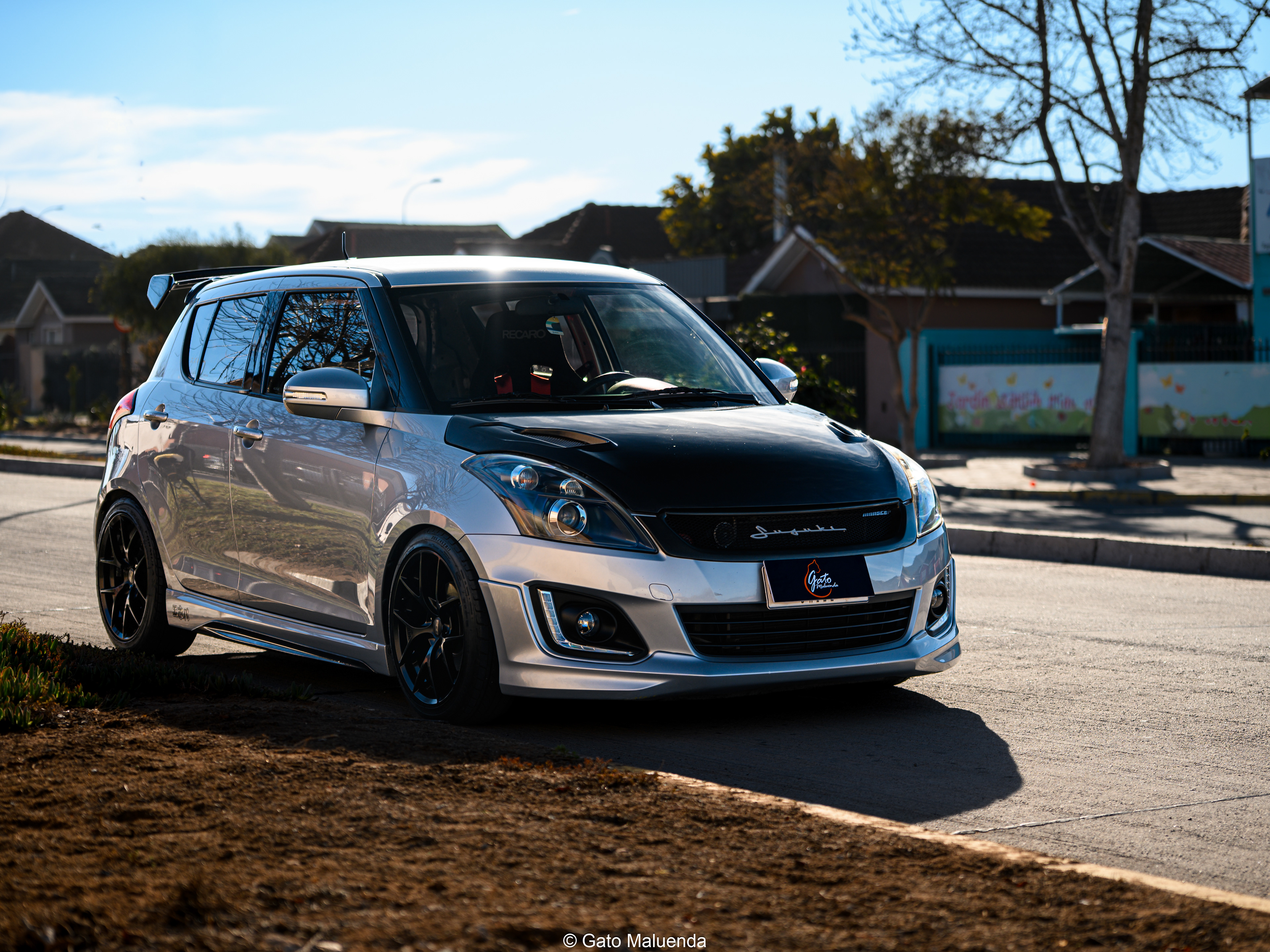
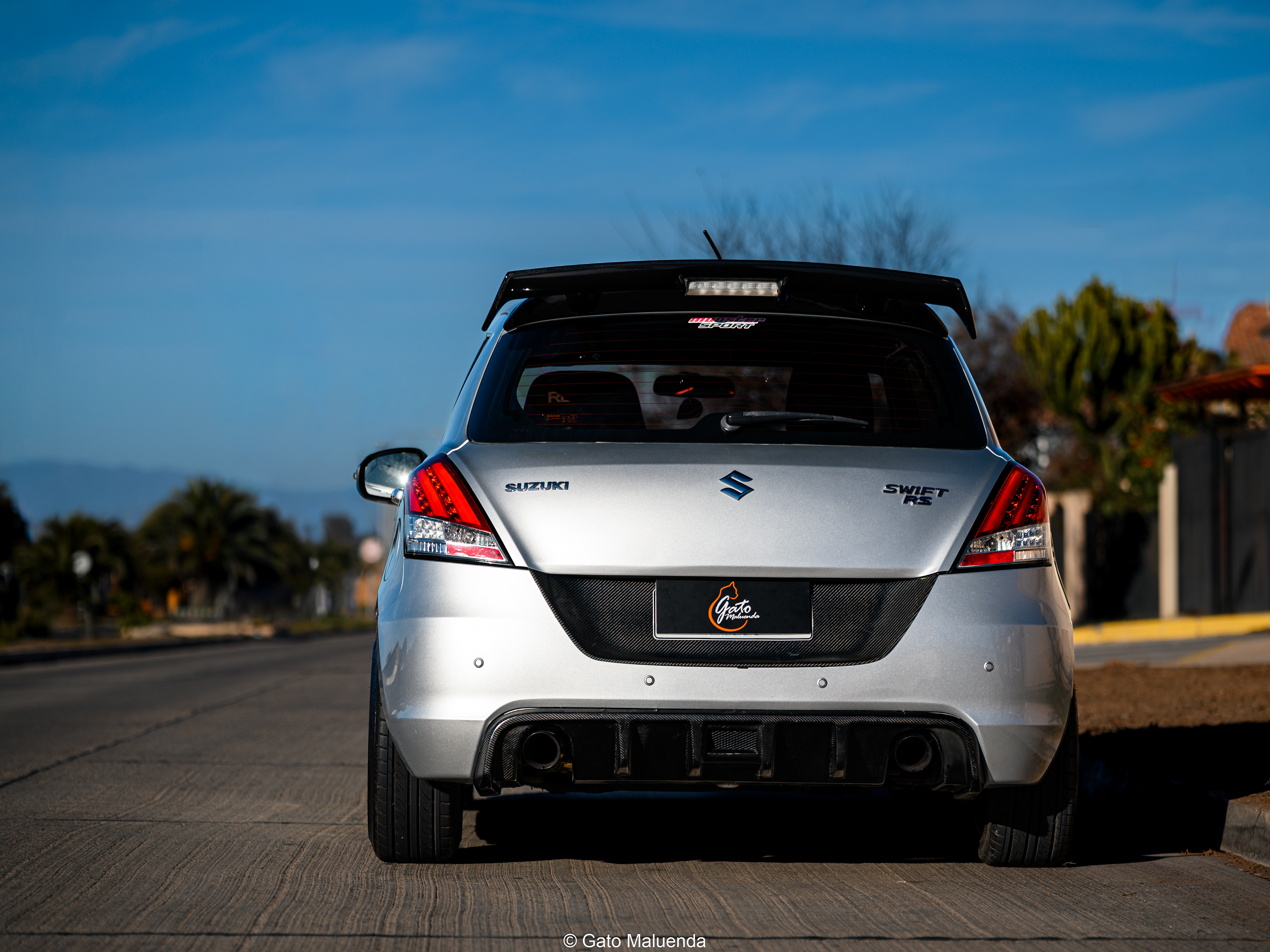
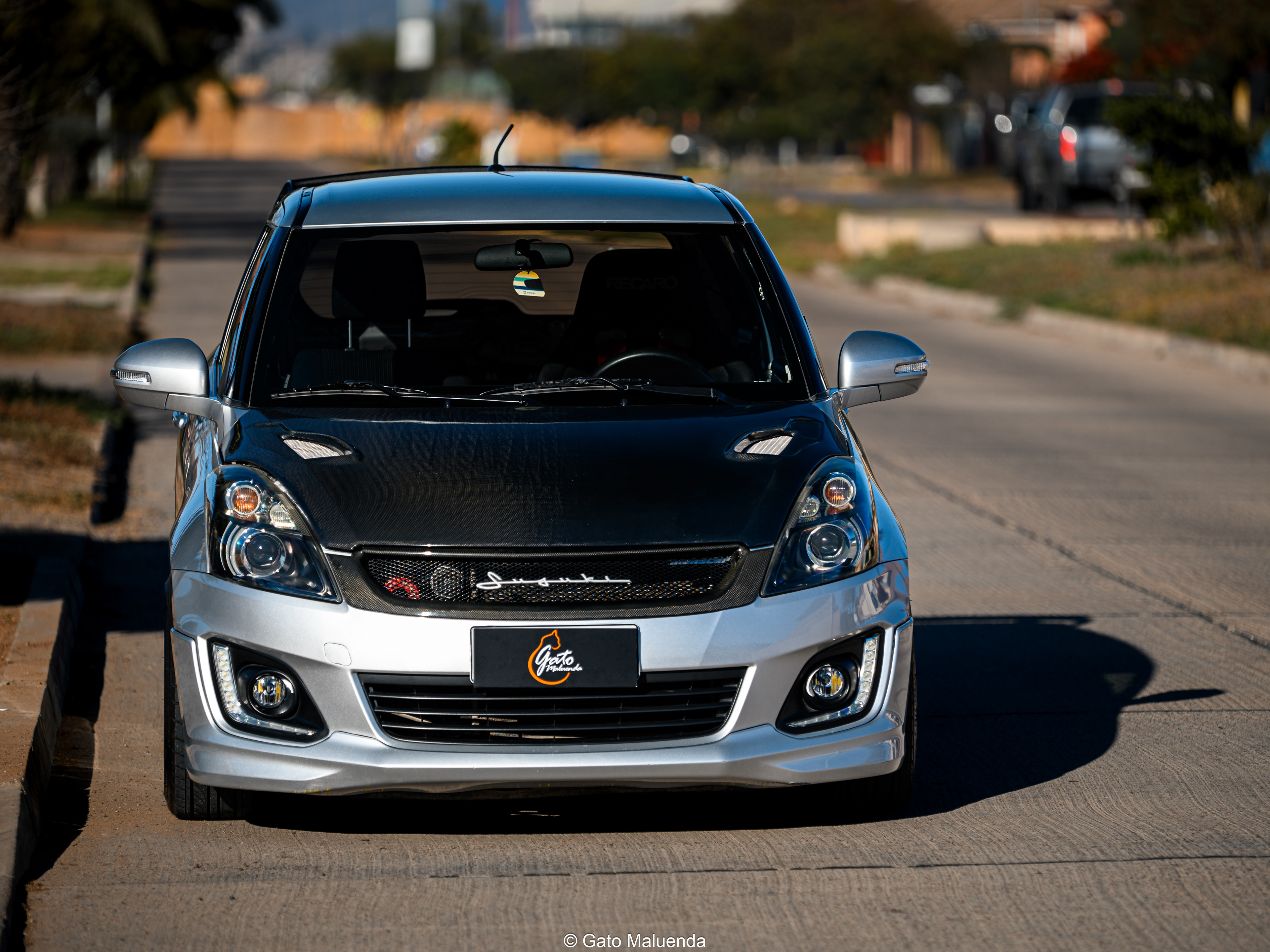
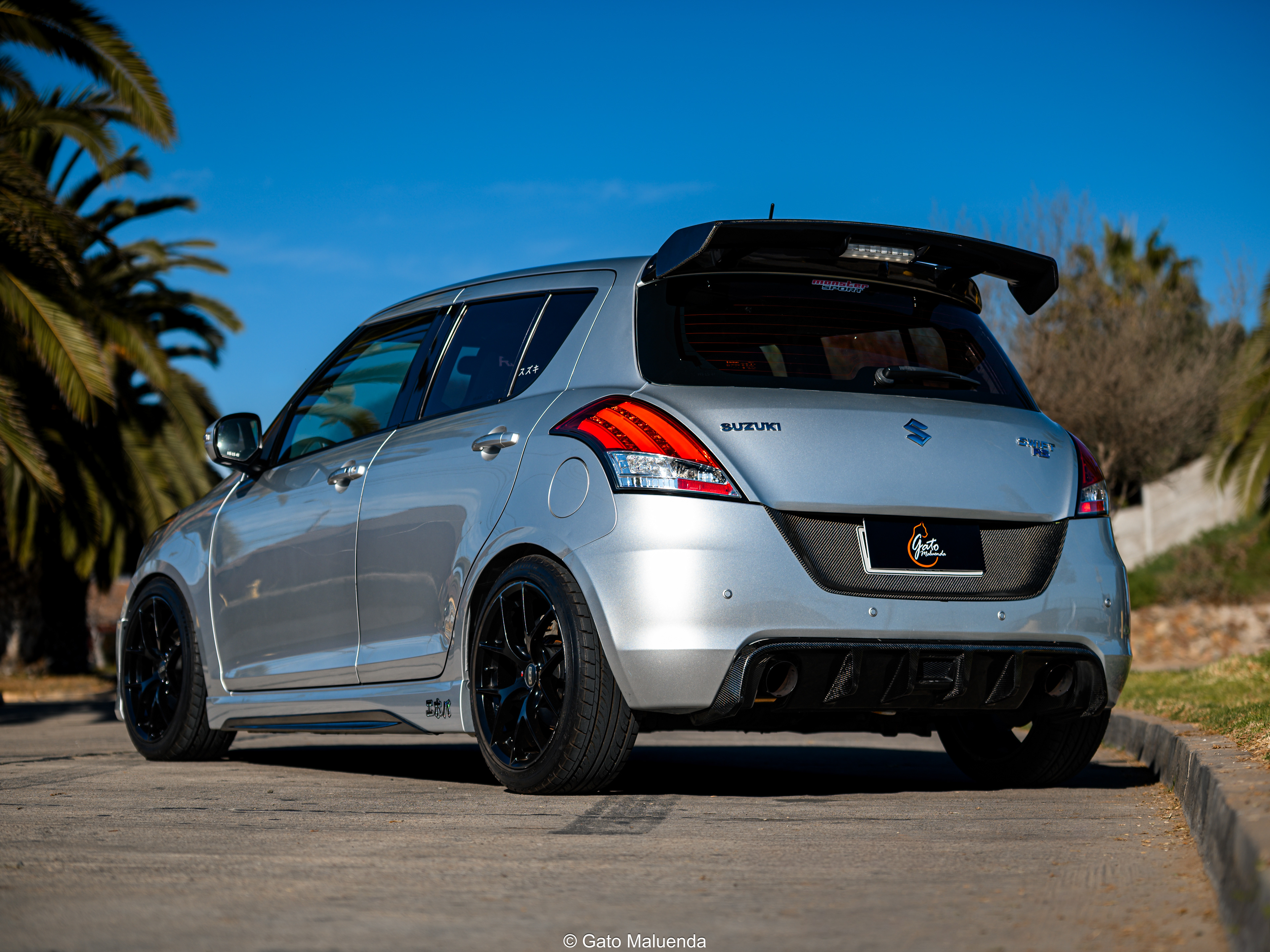
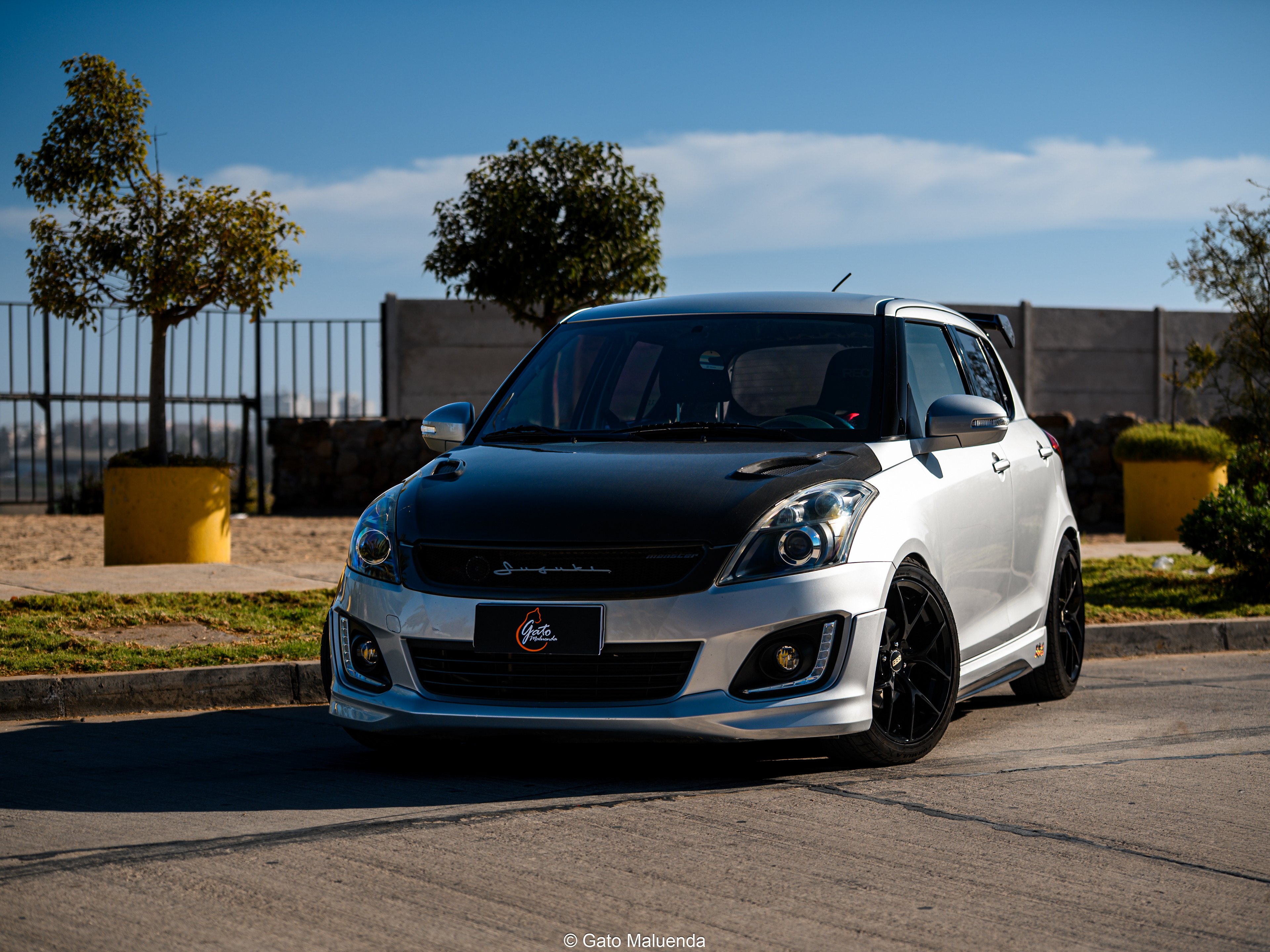
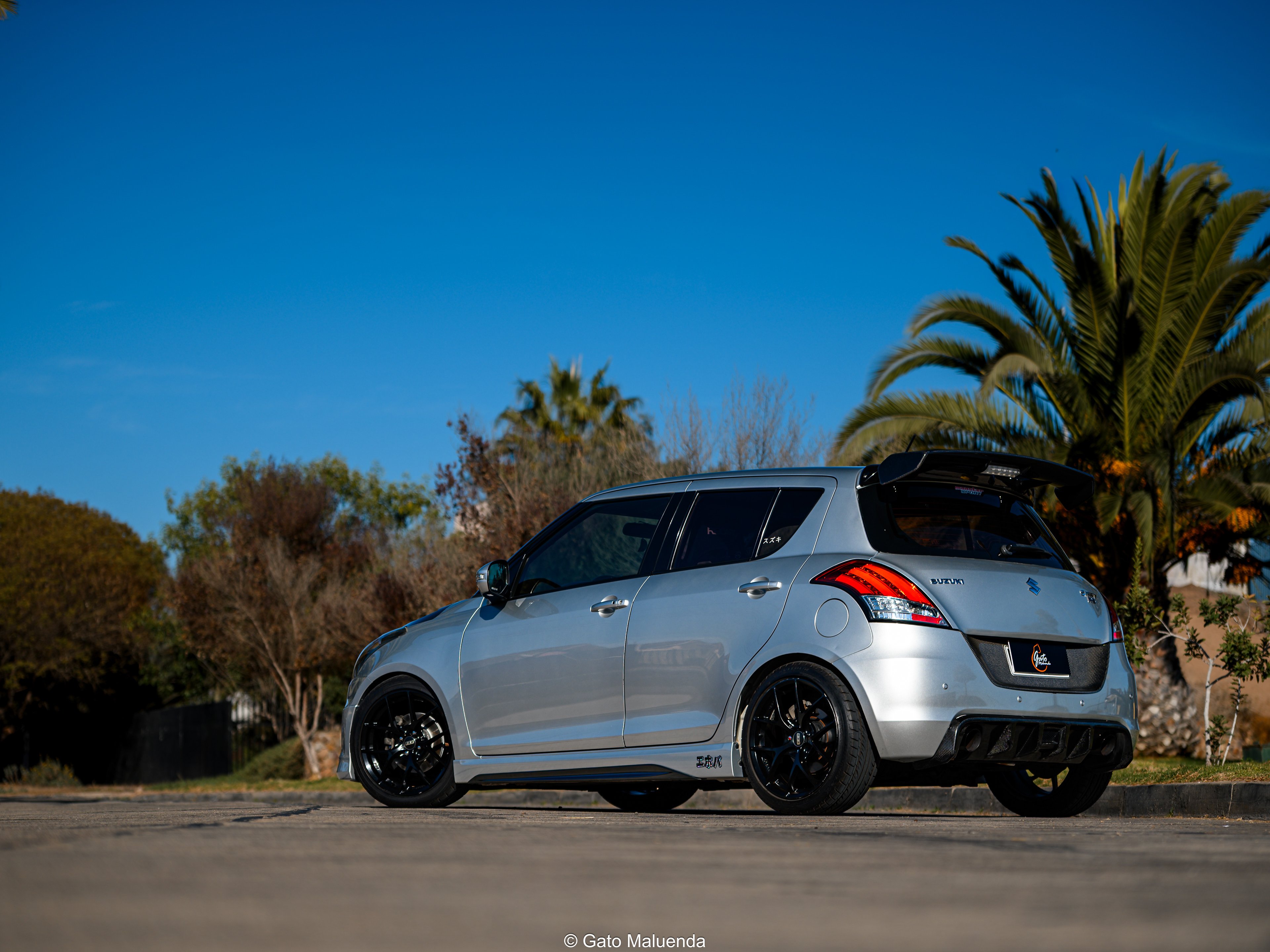
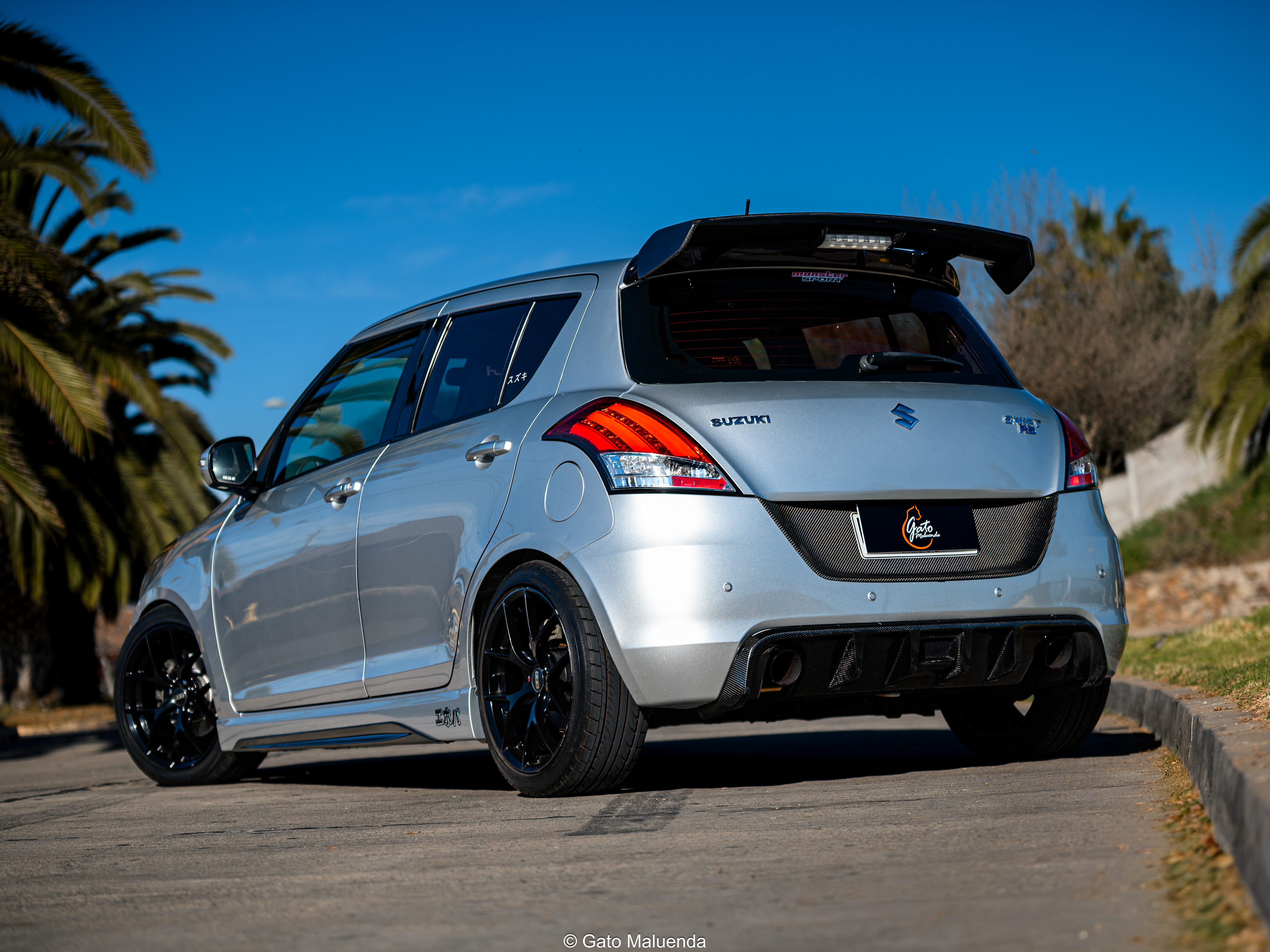
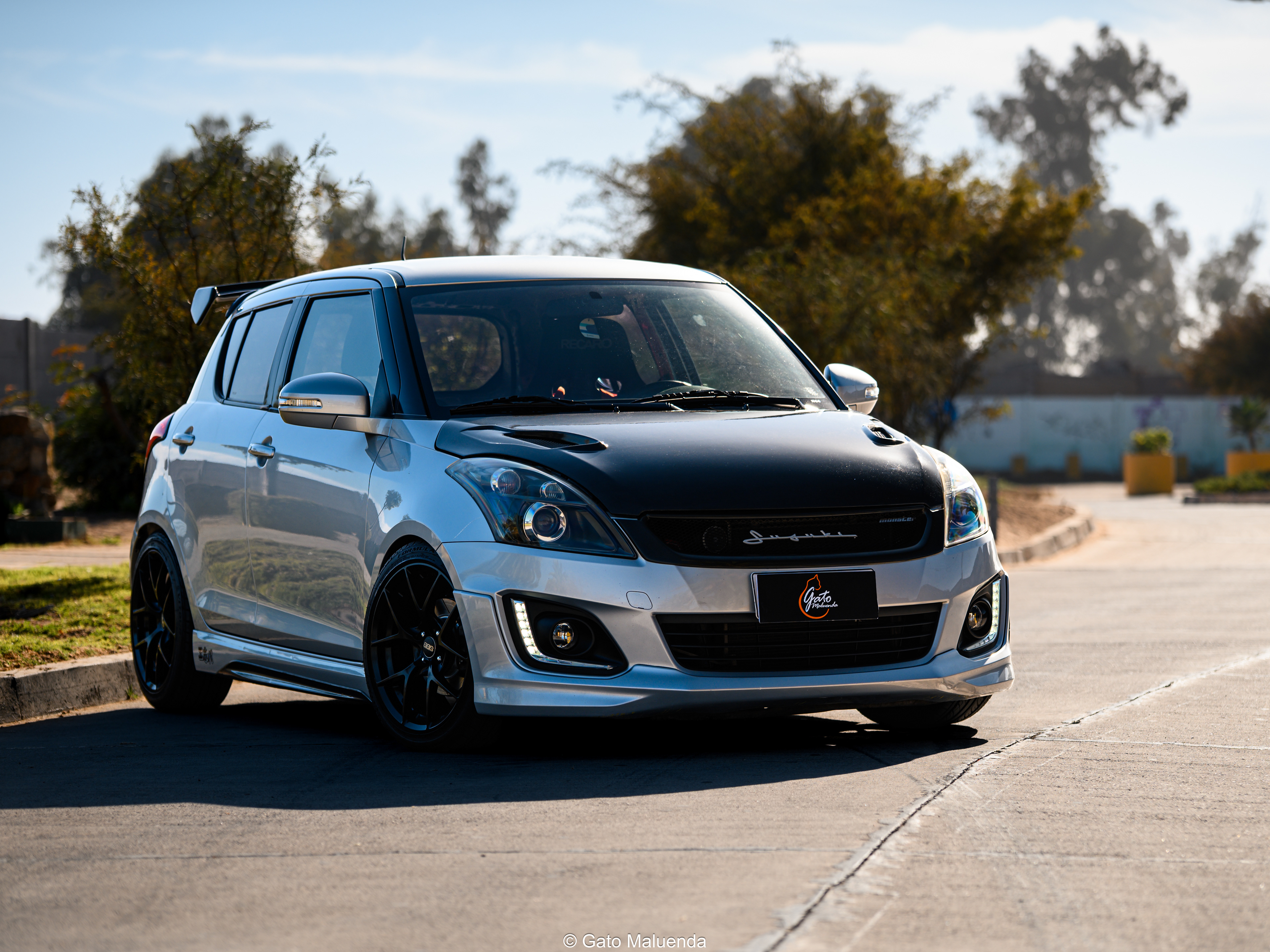
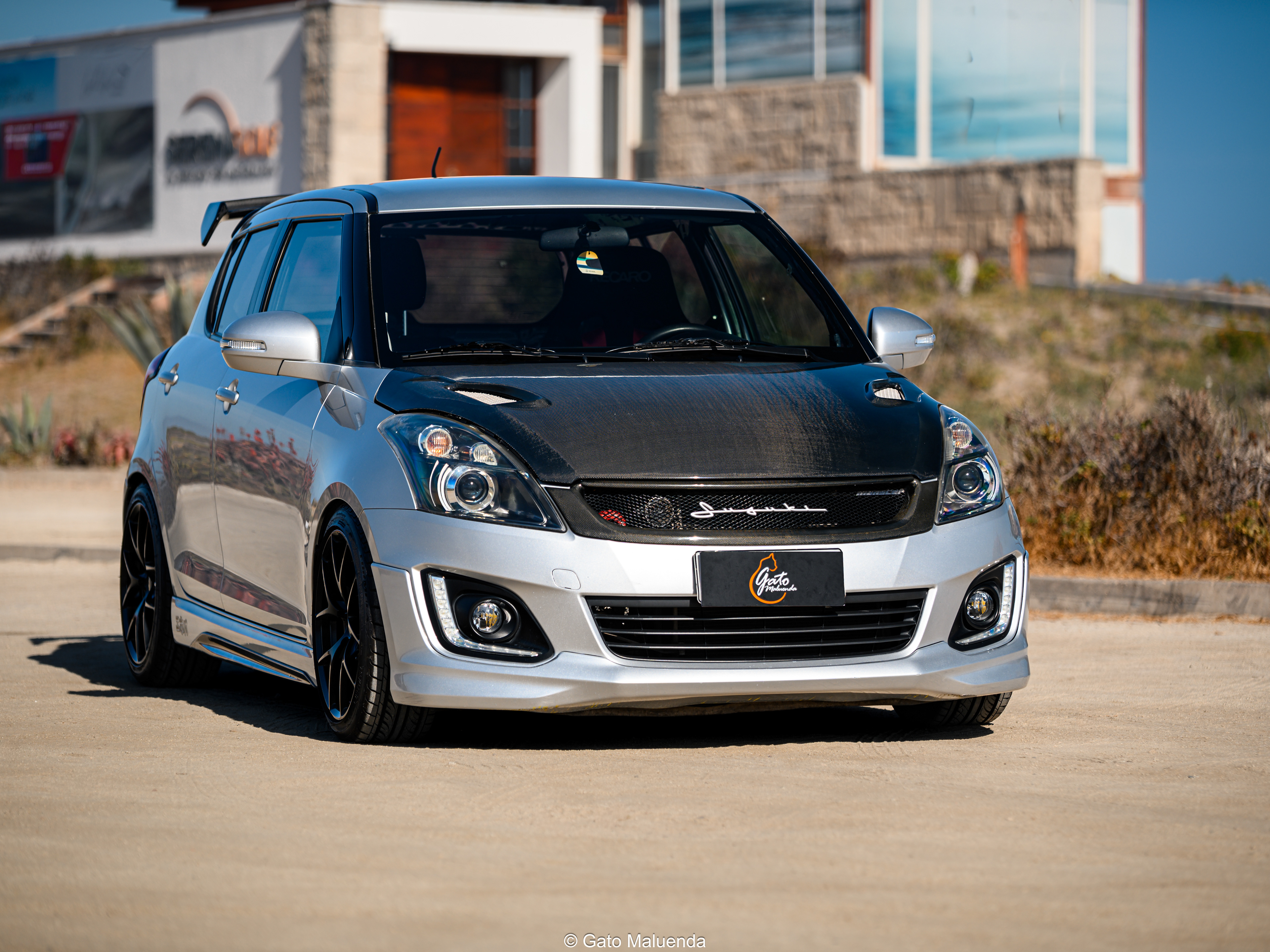
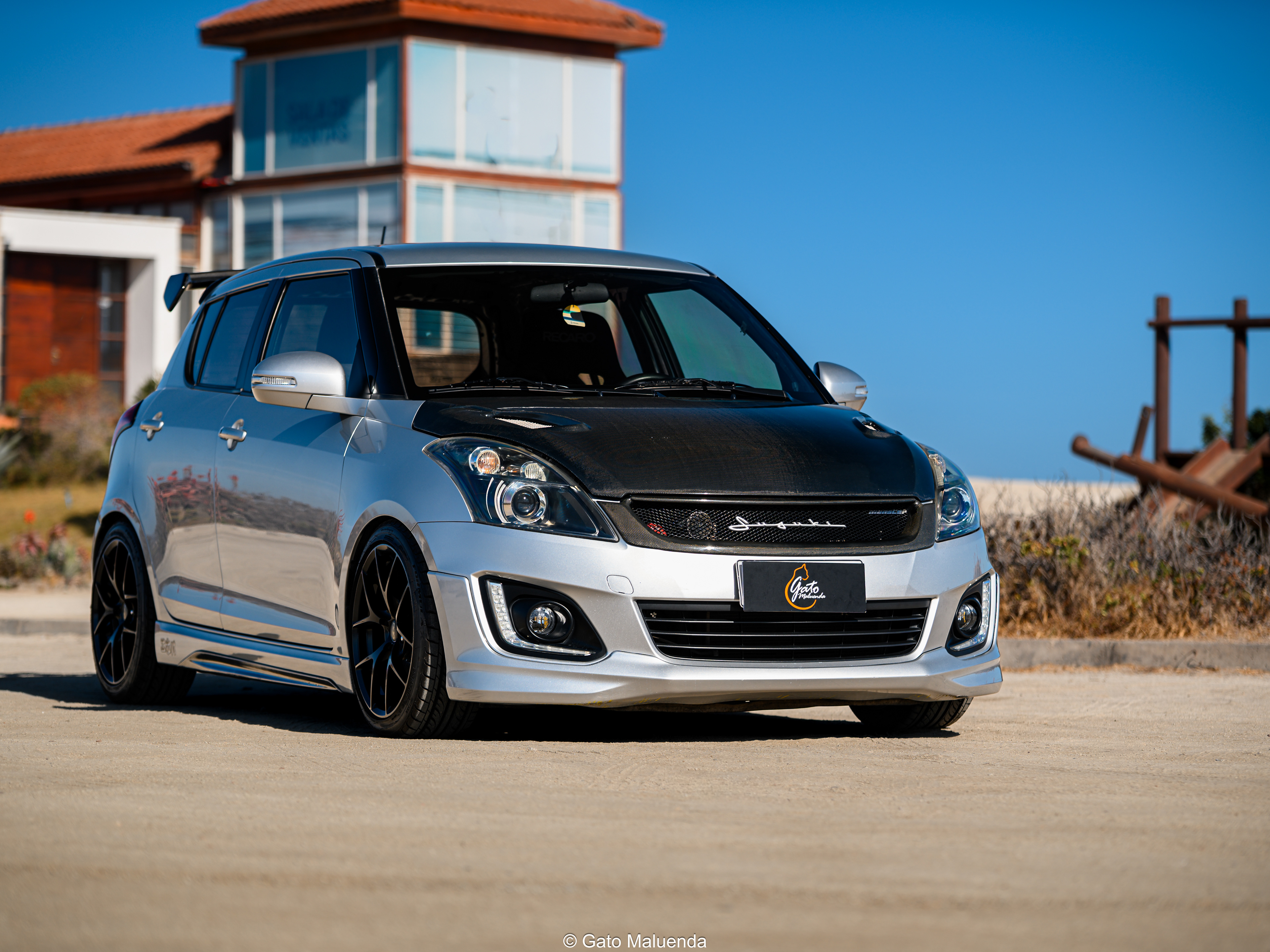
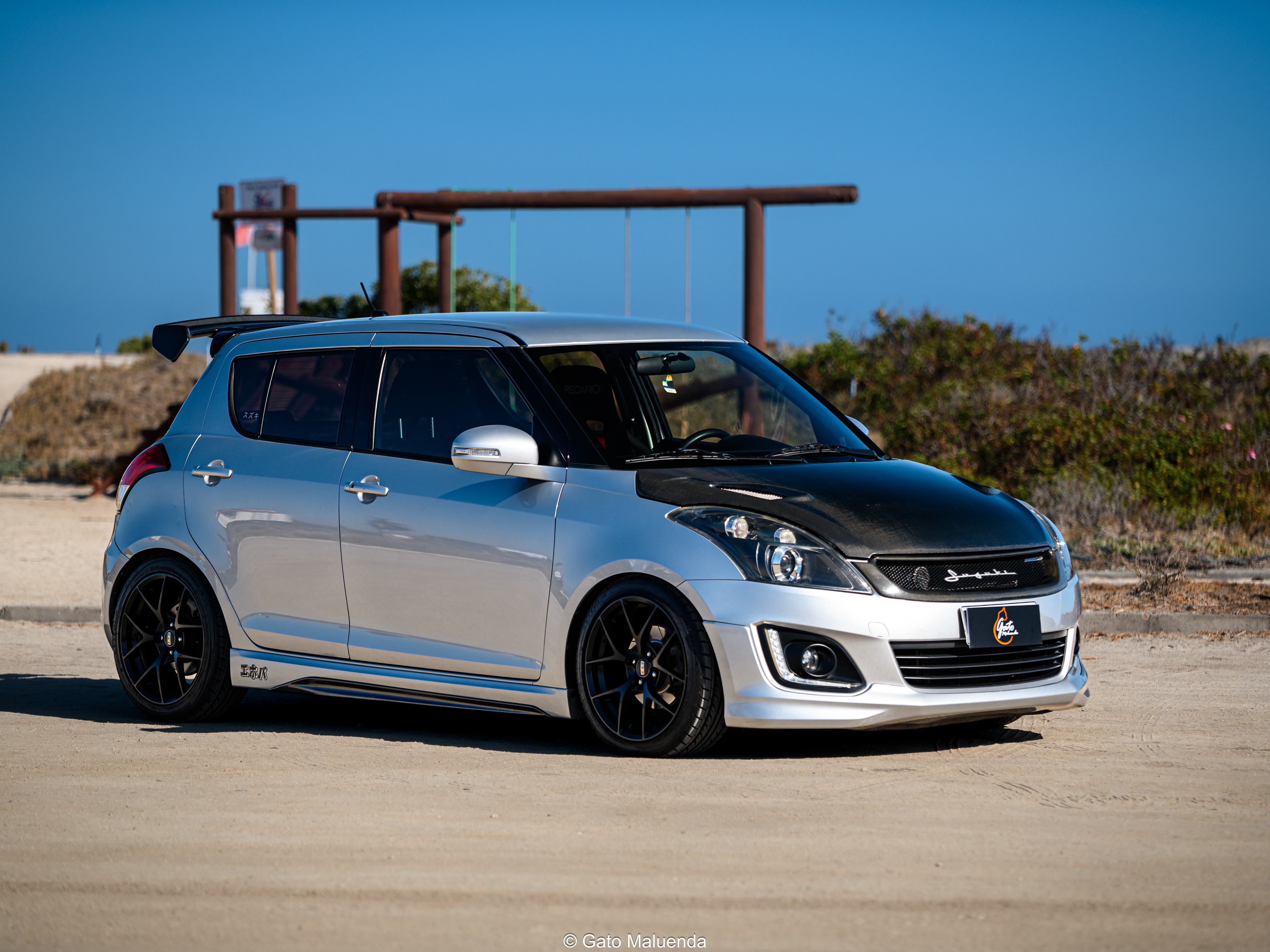
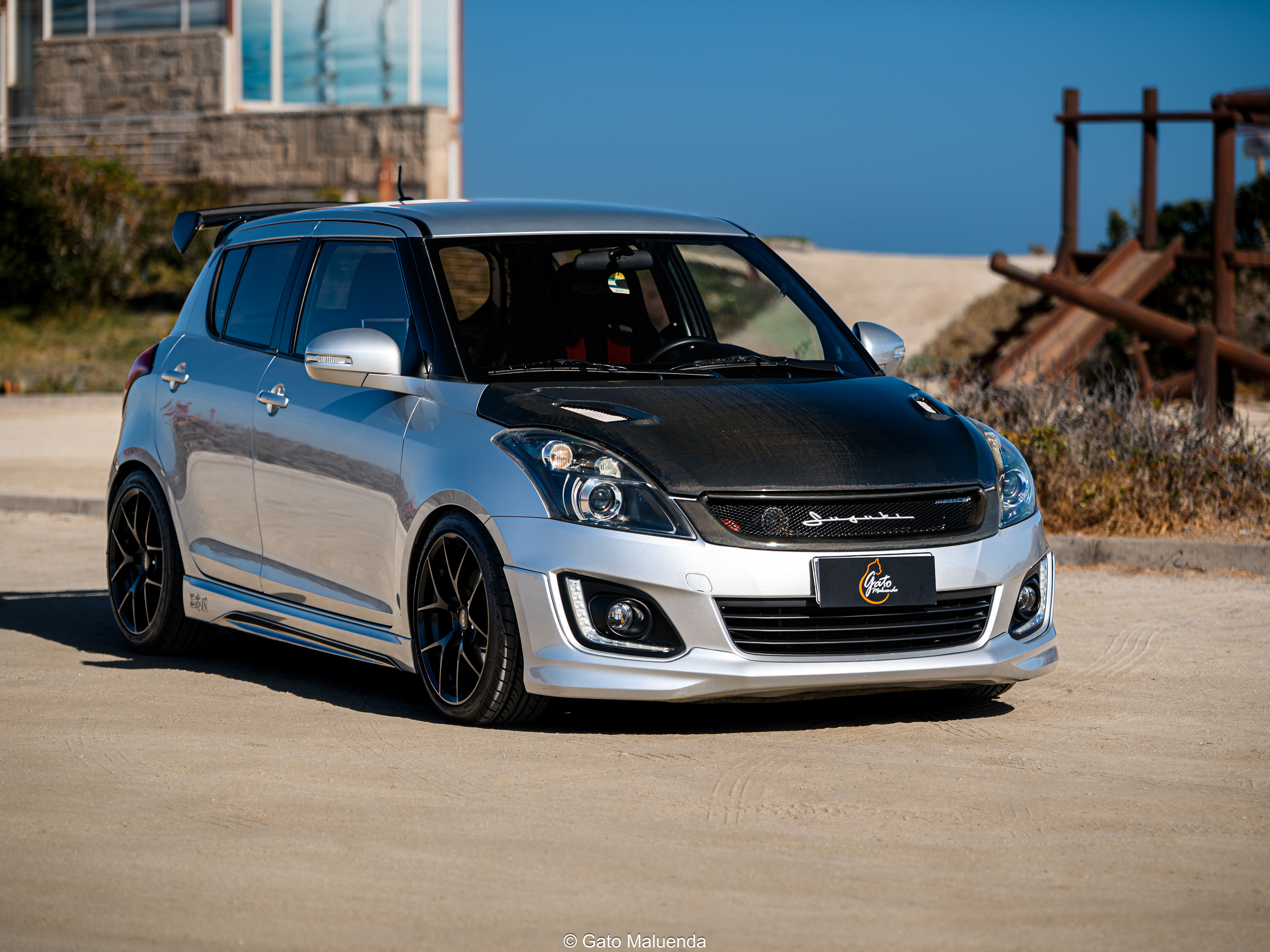
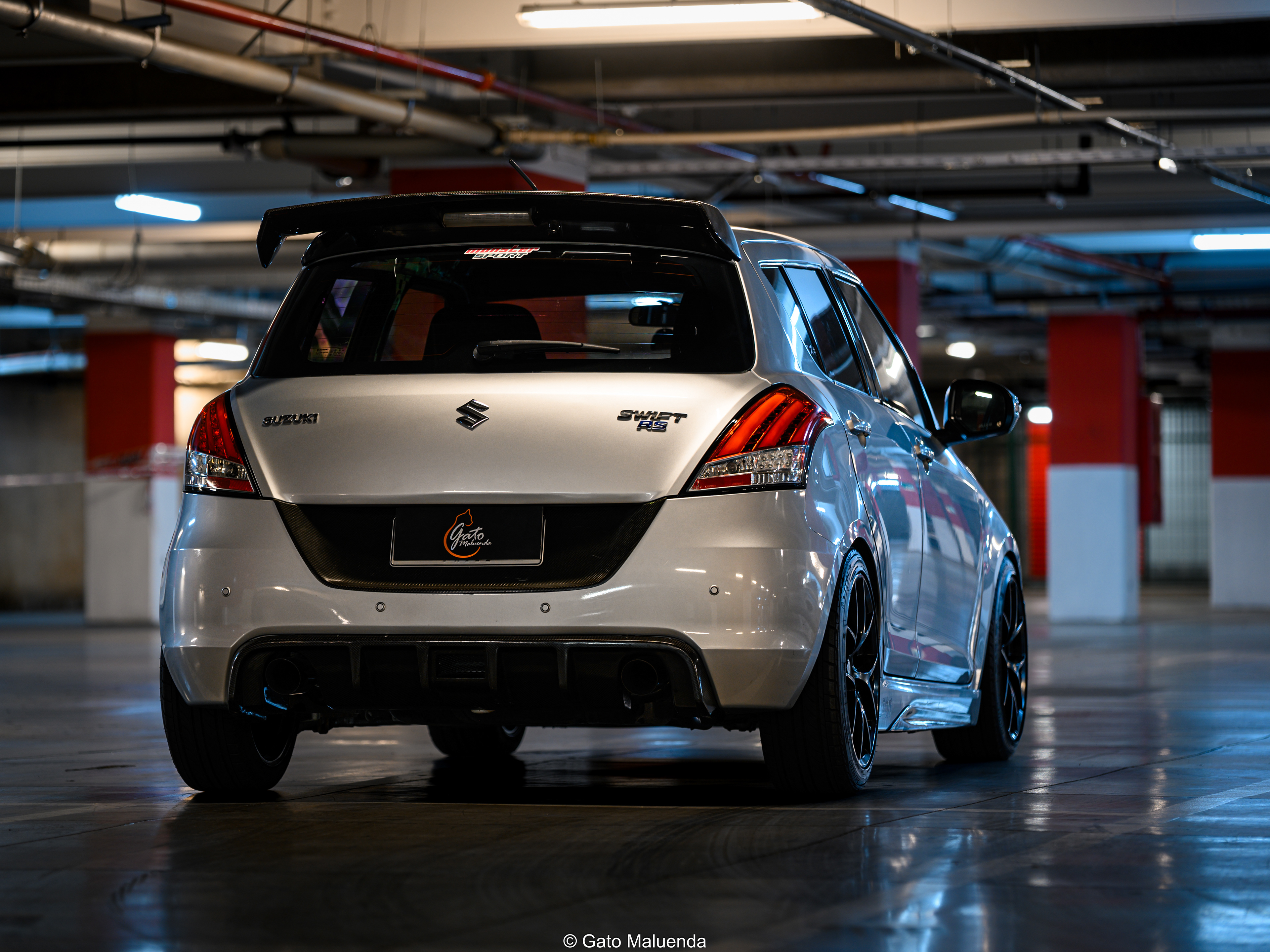
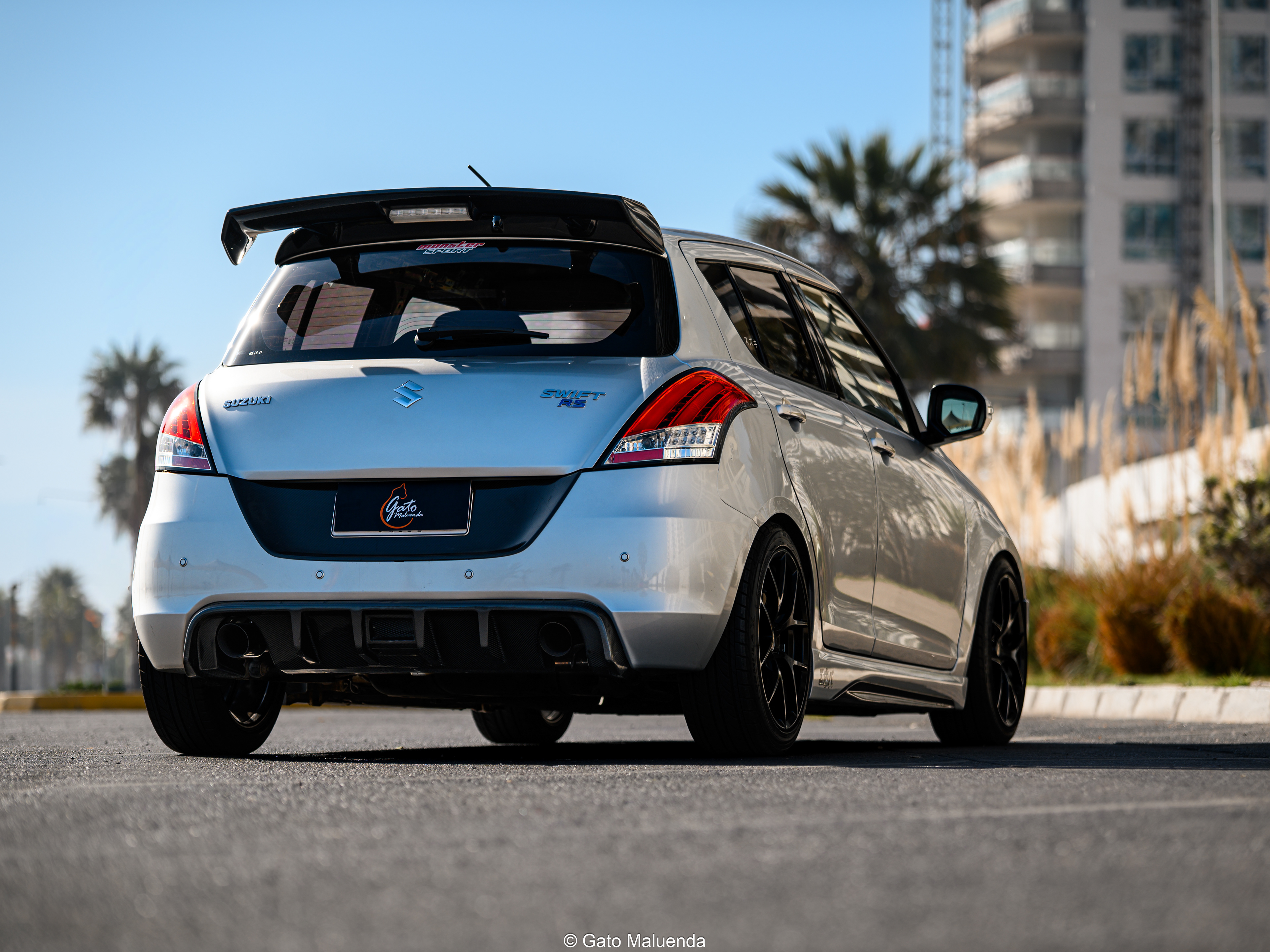
Exteriormente, el proyecto está armado con una mezcla muy particular de piezas originales japonesas.
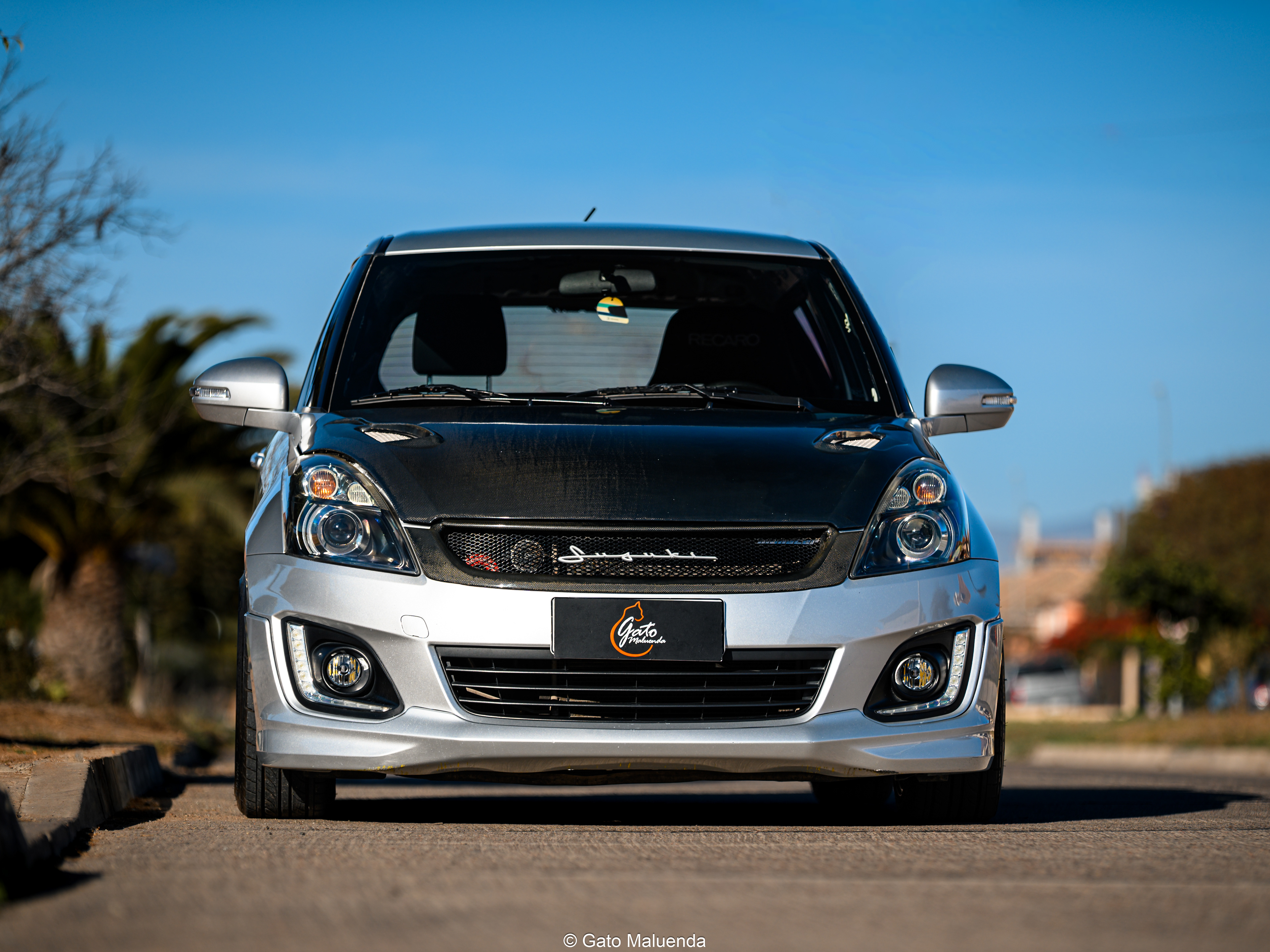
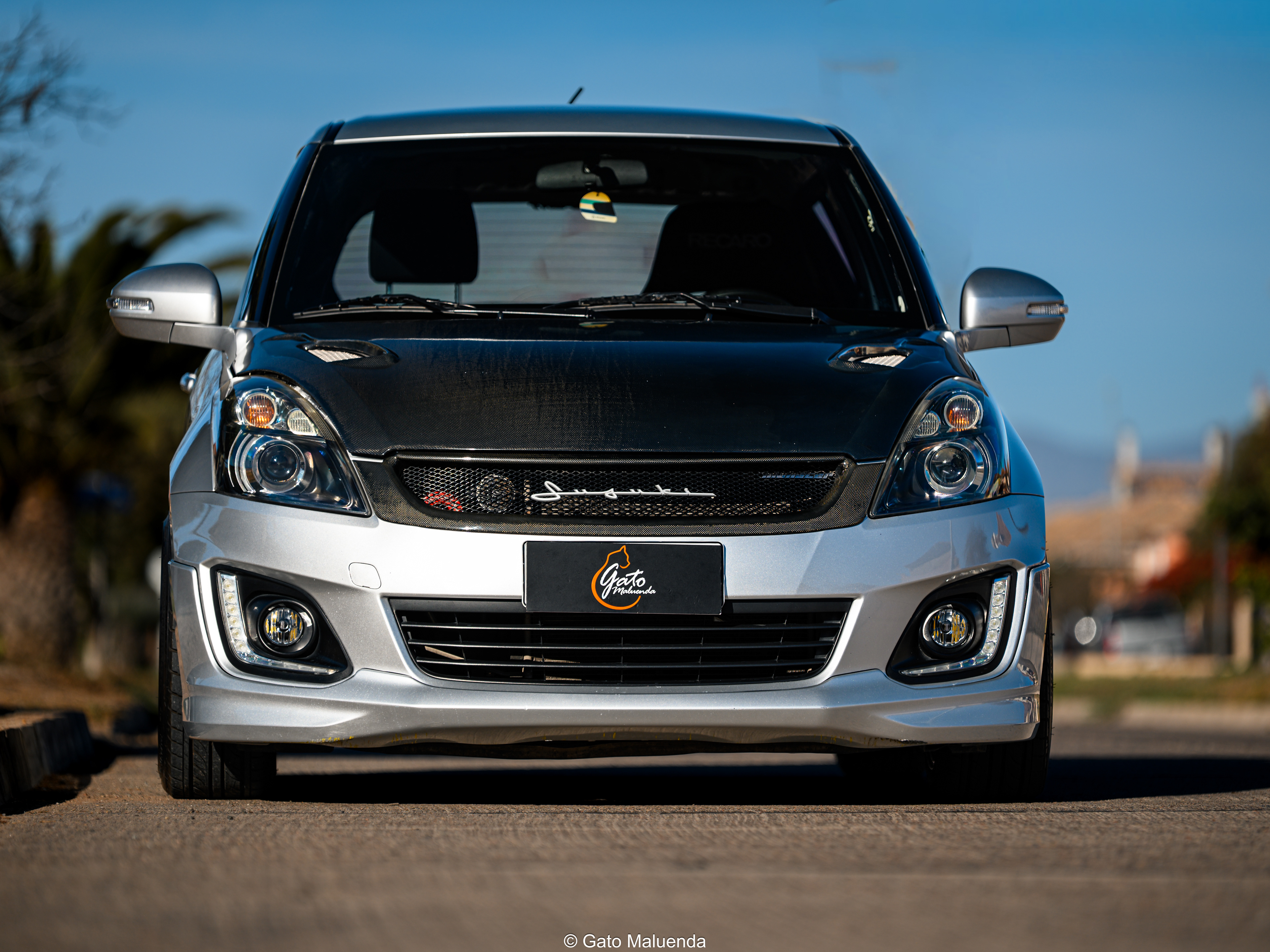
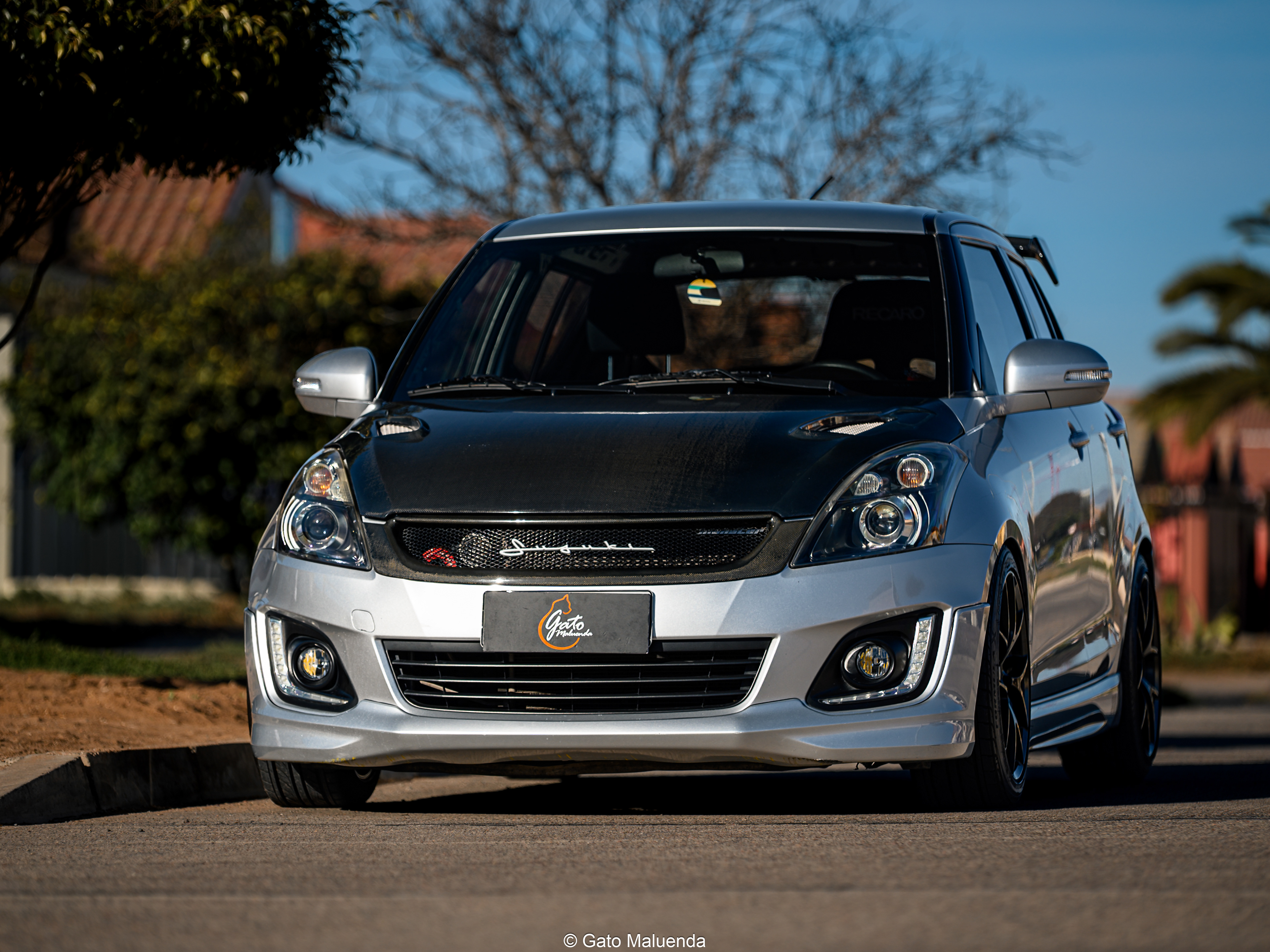
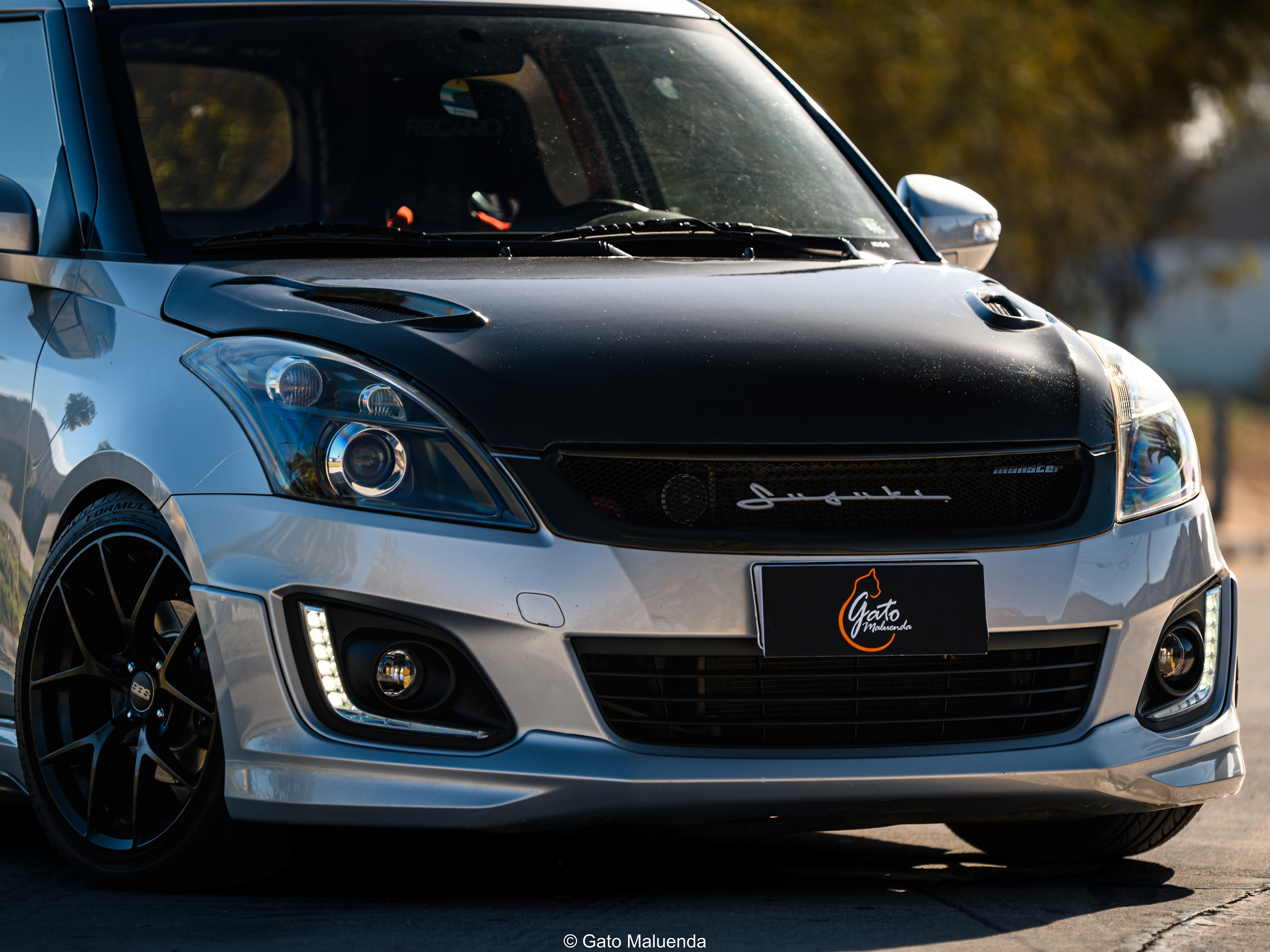
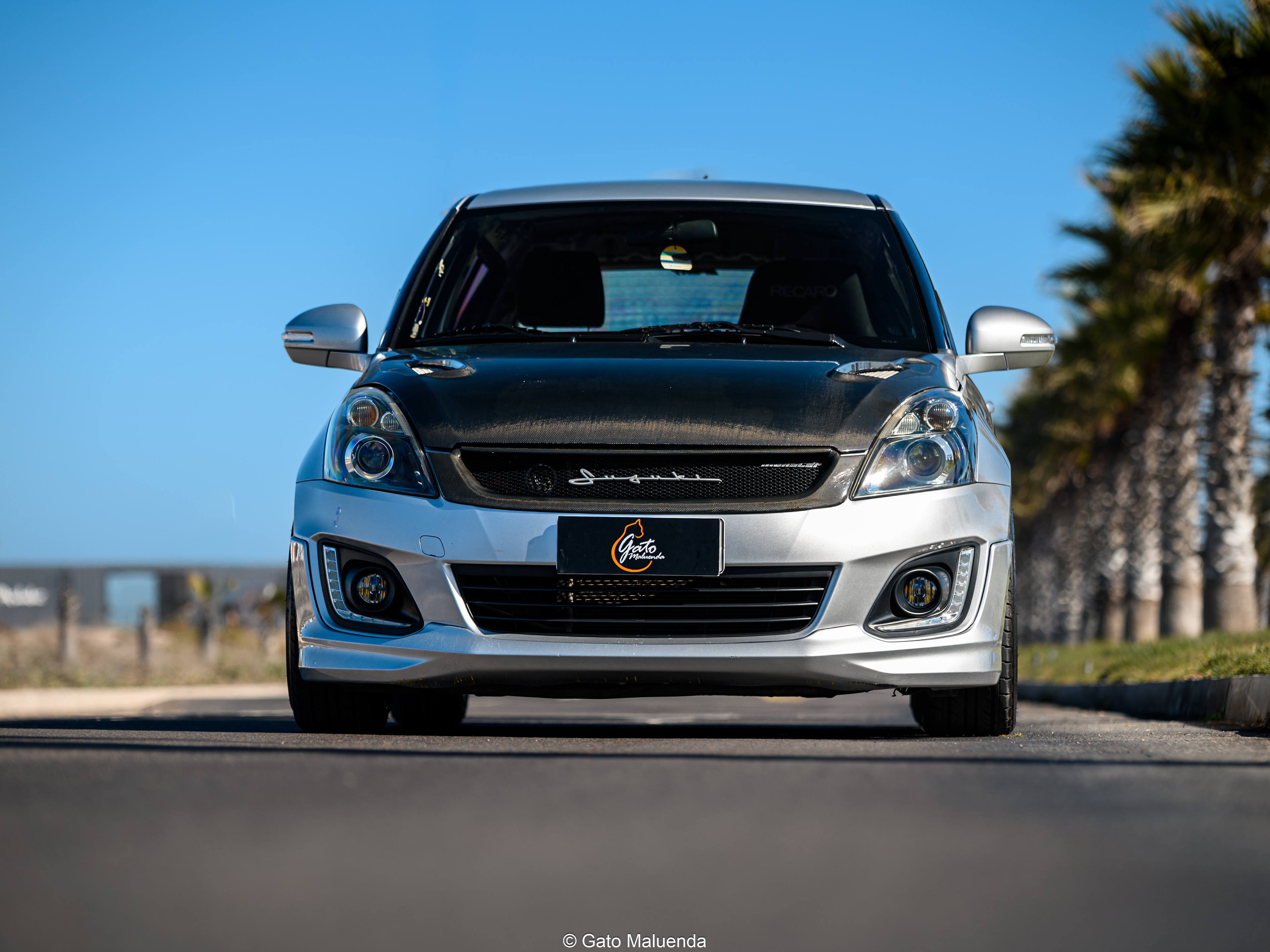
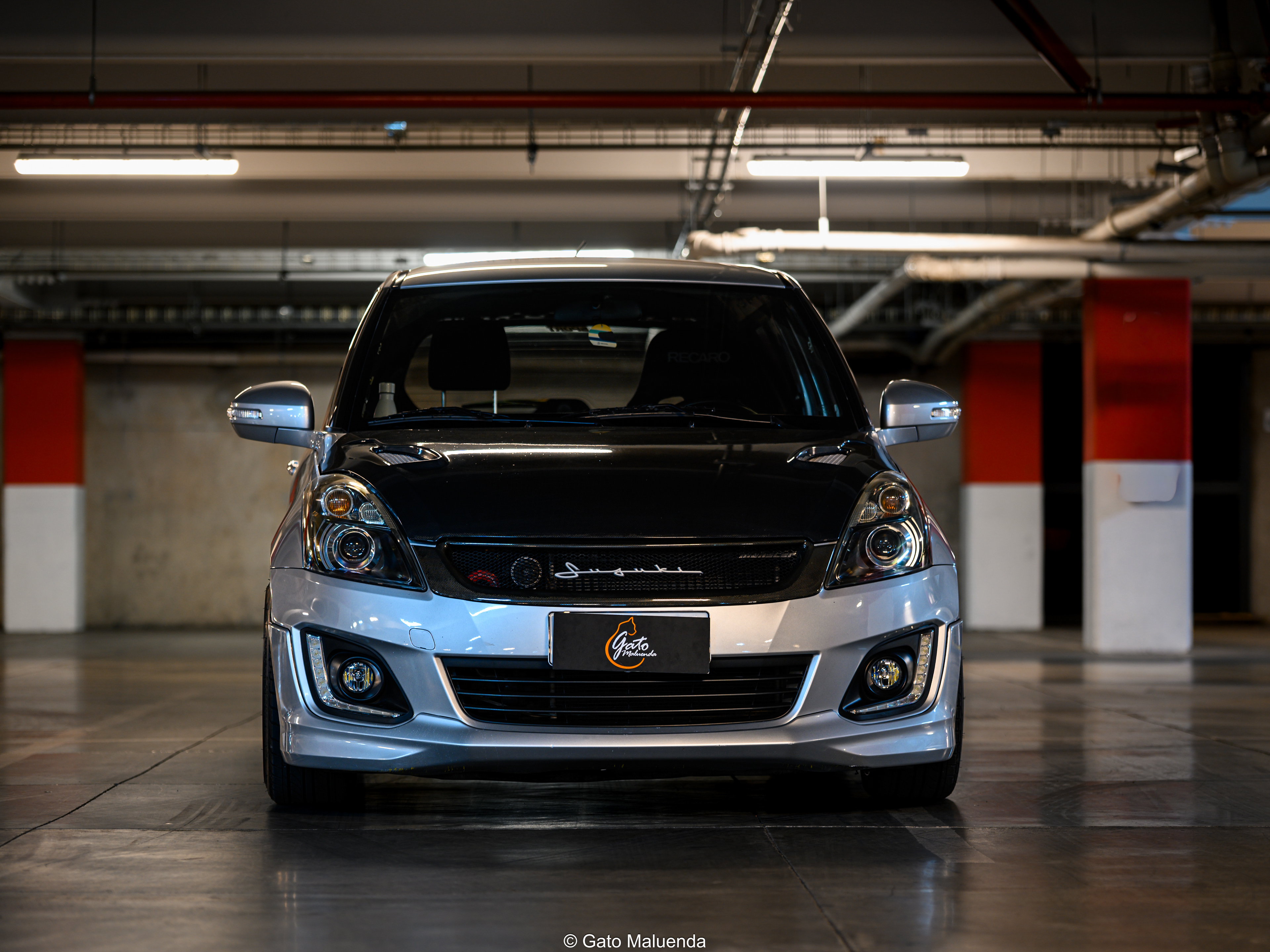
El frontal completo proviene de la versión RS japonesa. Su máscara frontal y capot son de fibra de carbono Monster Sport;
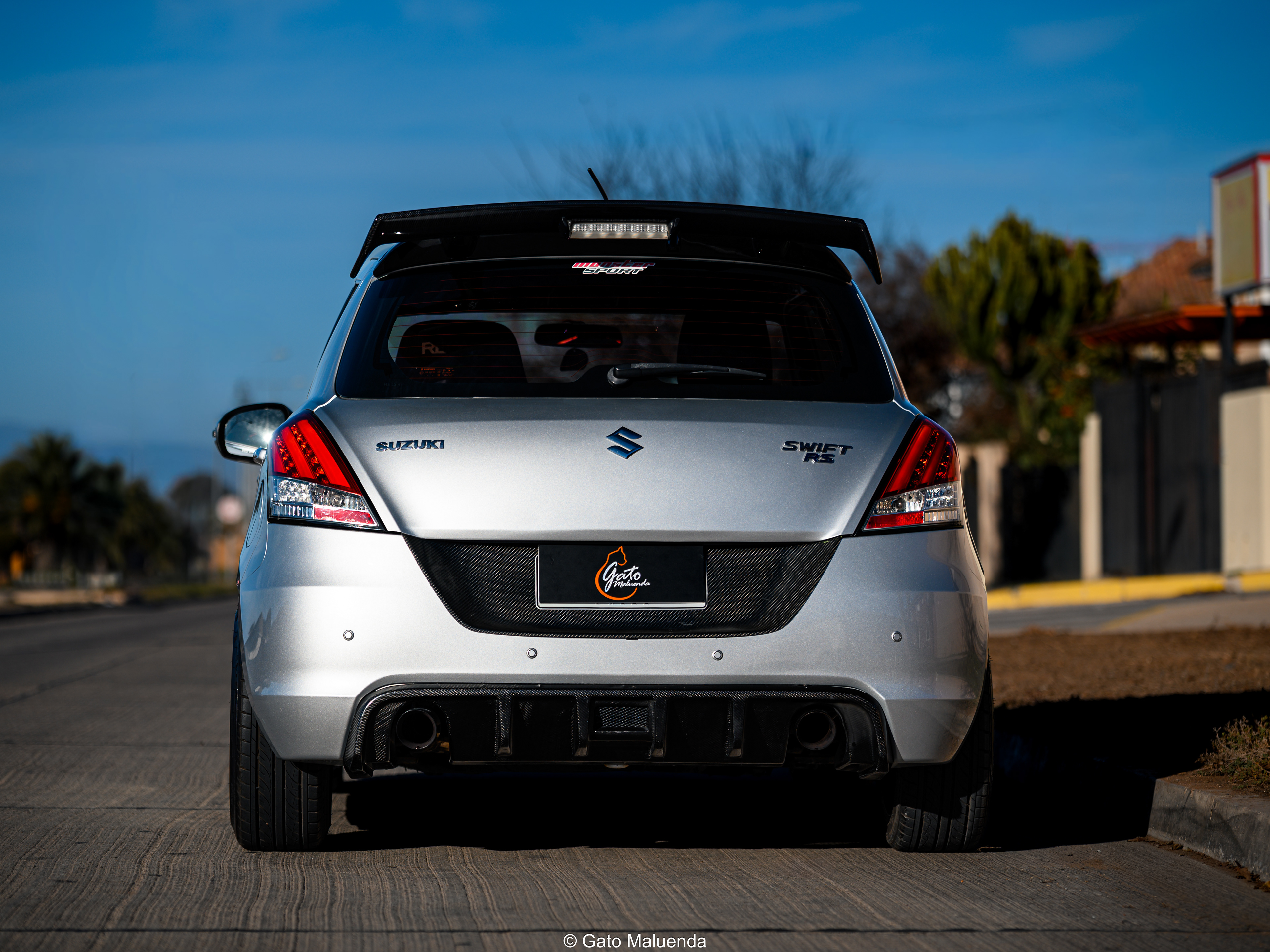
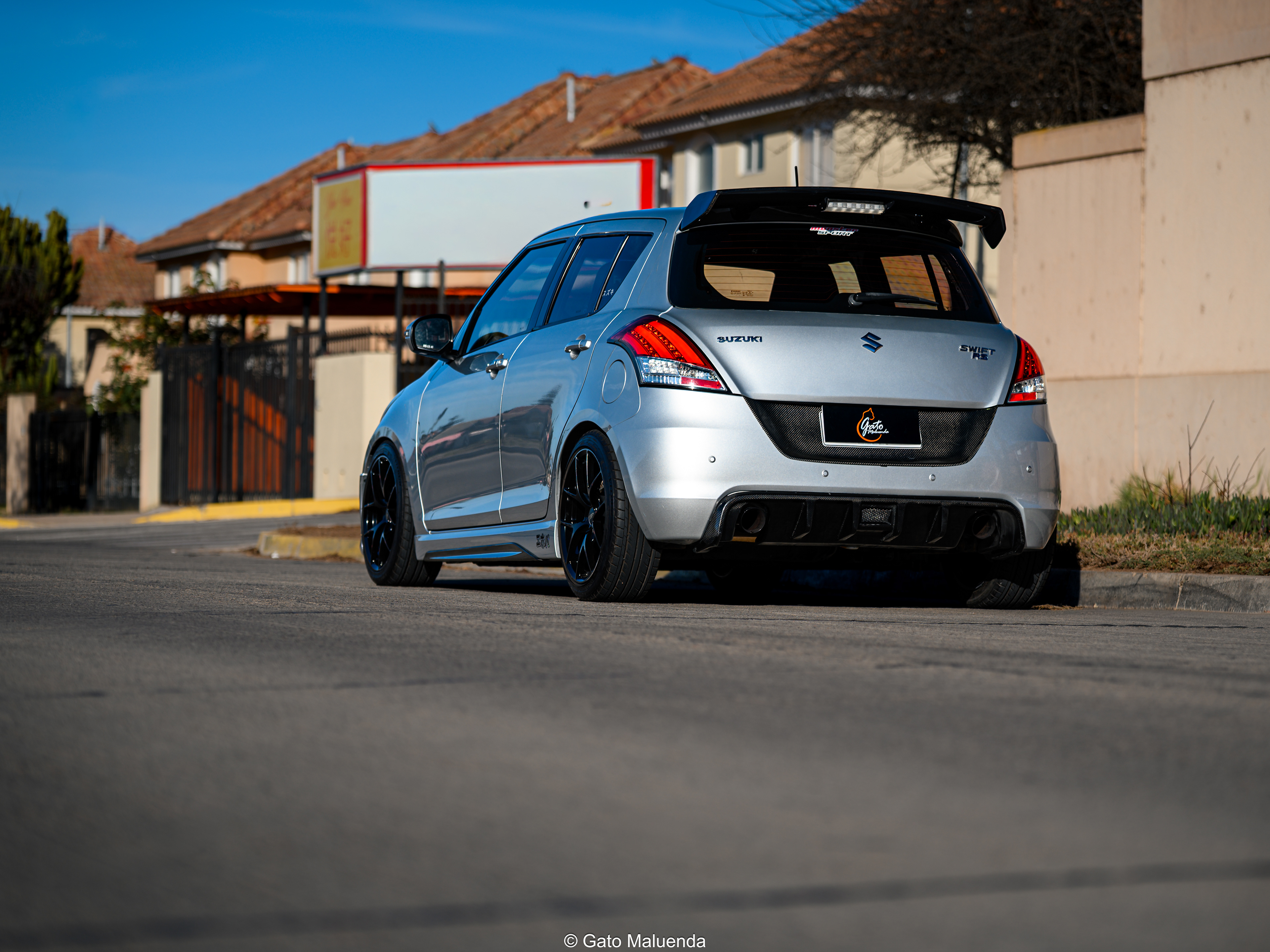
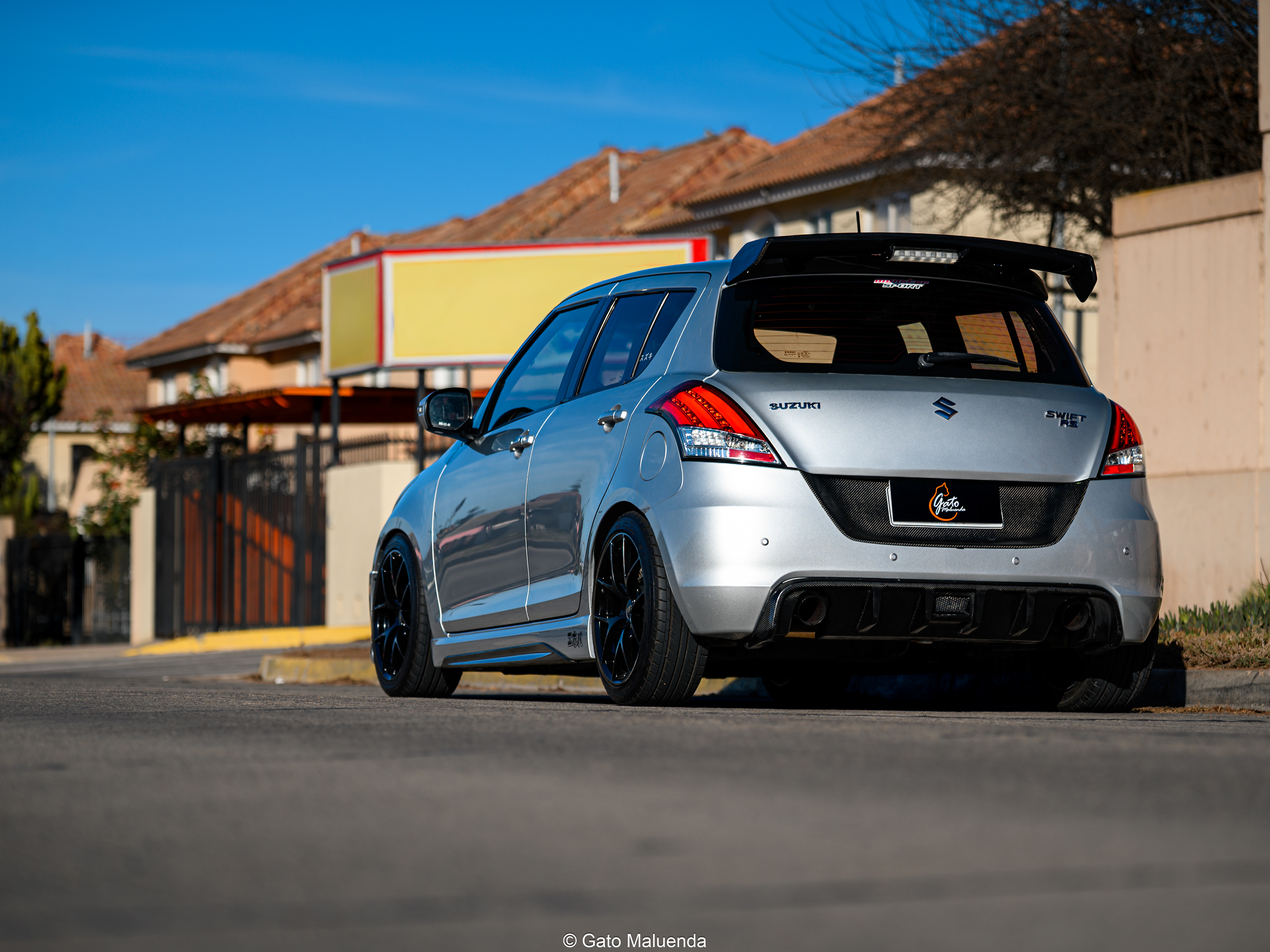
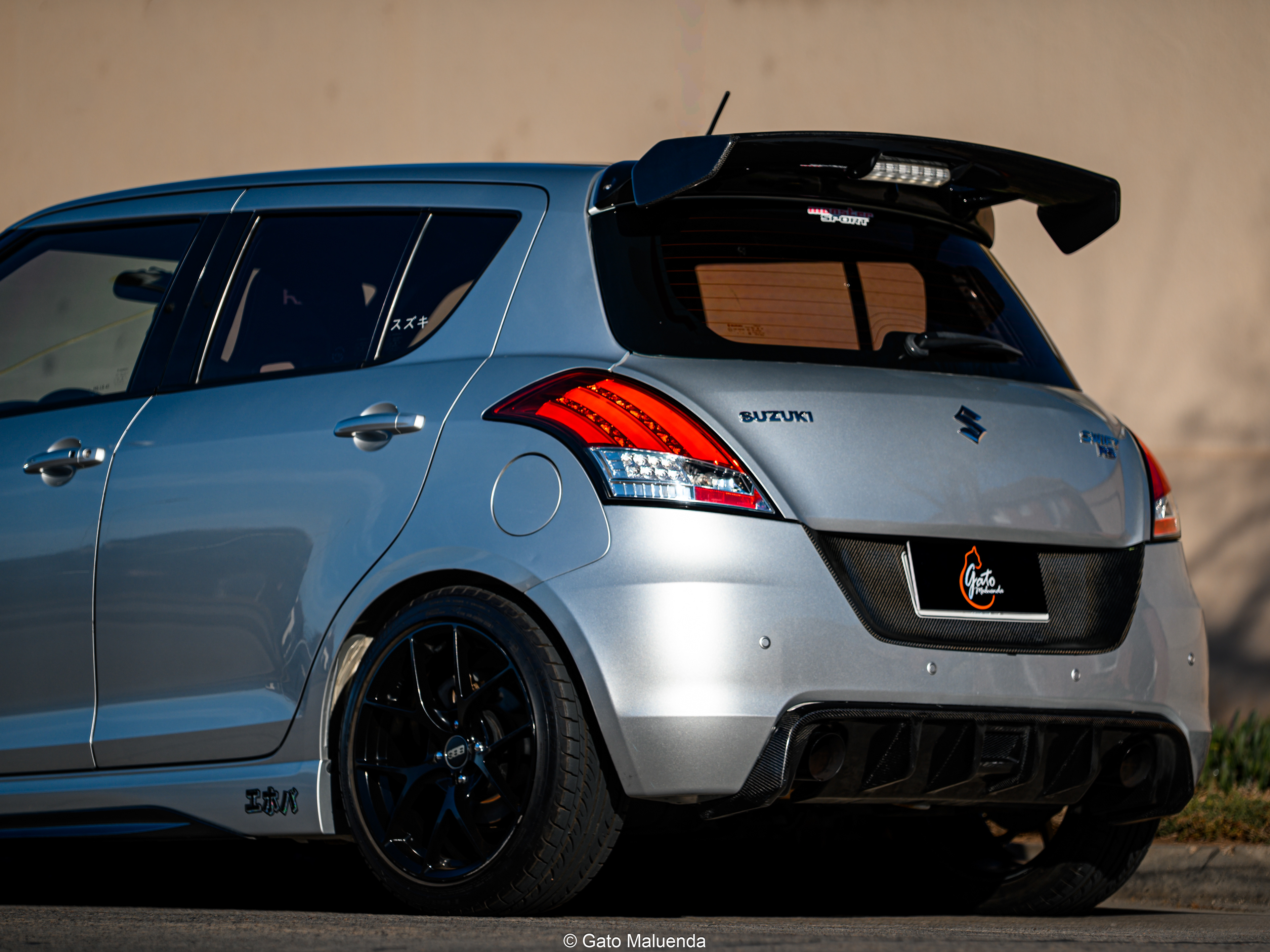
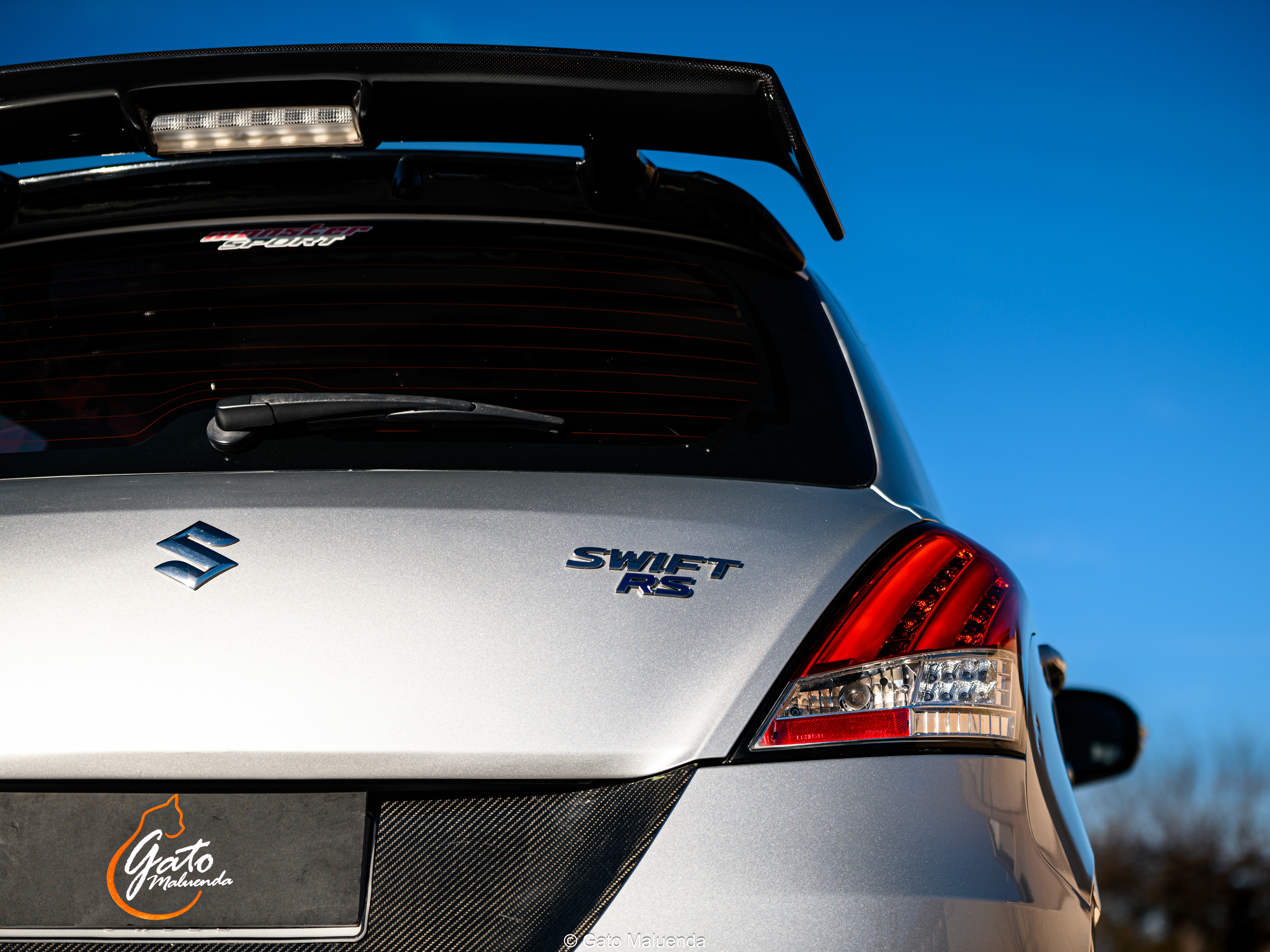
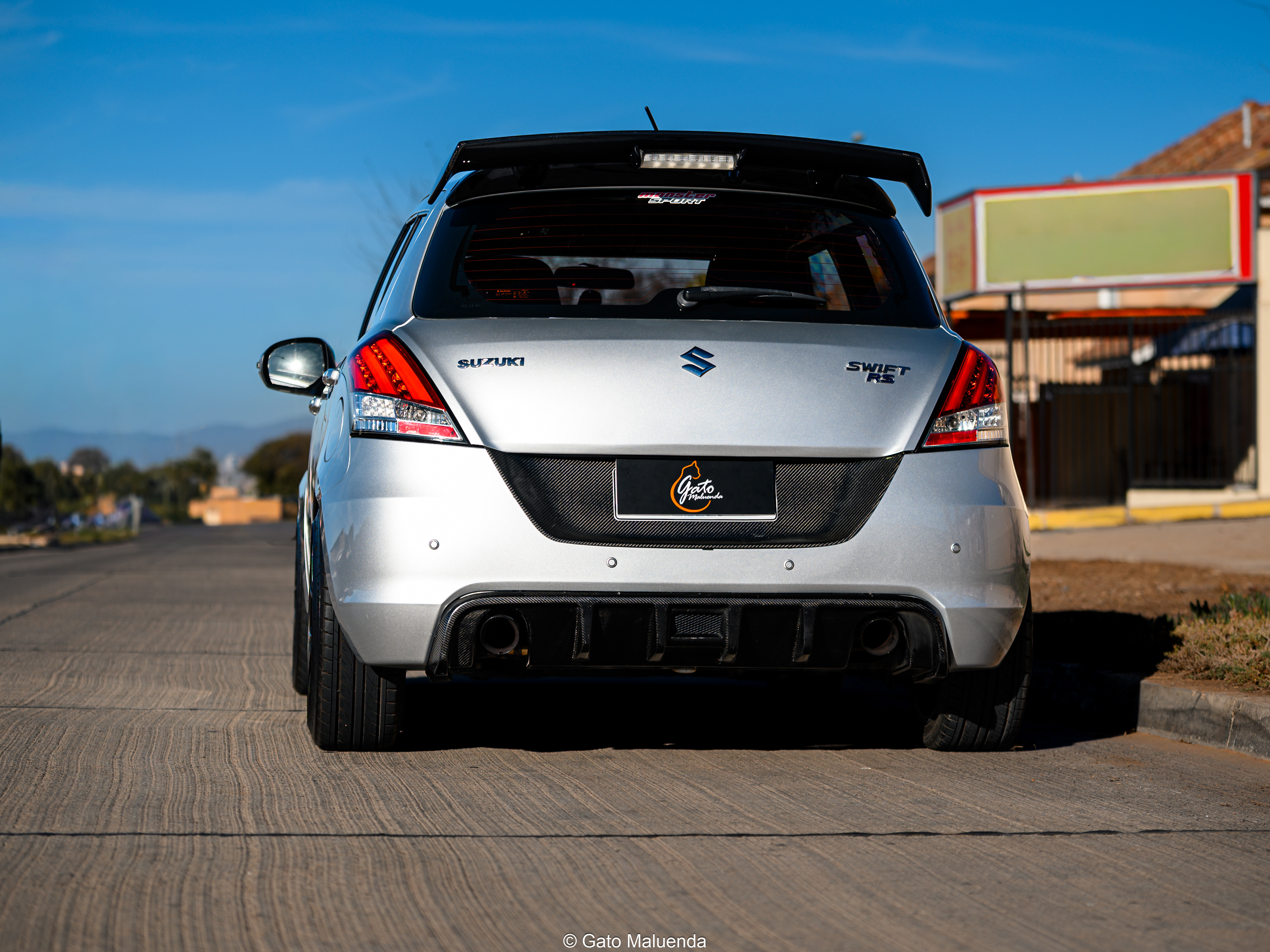
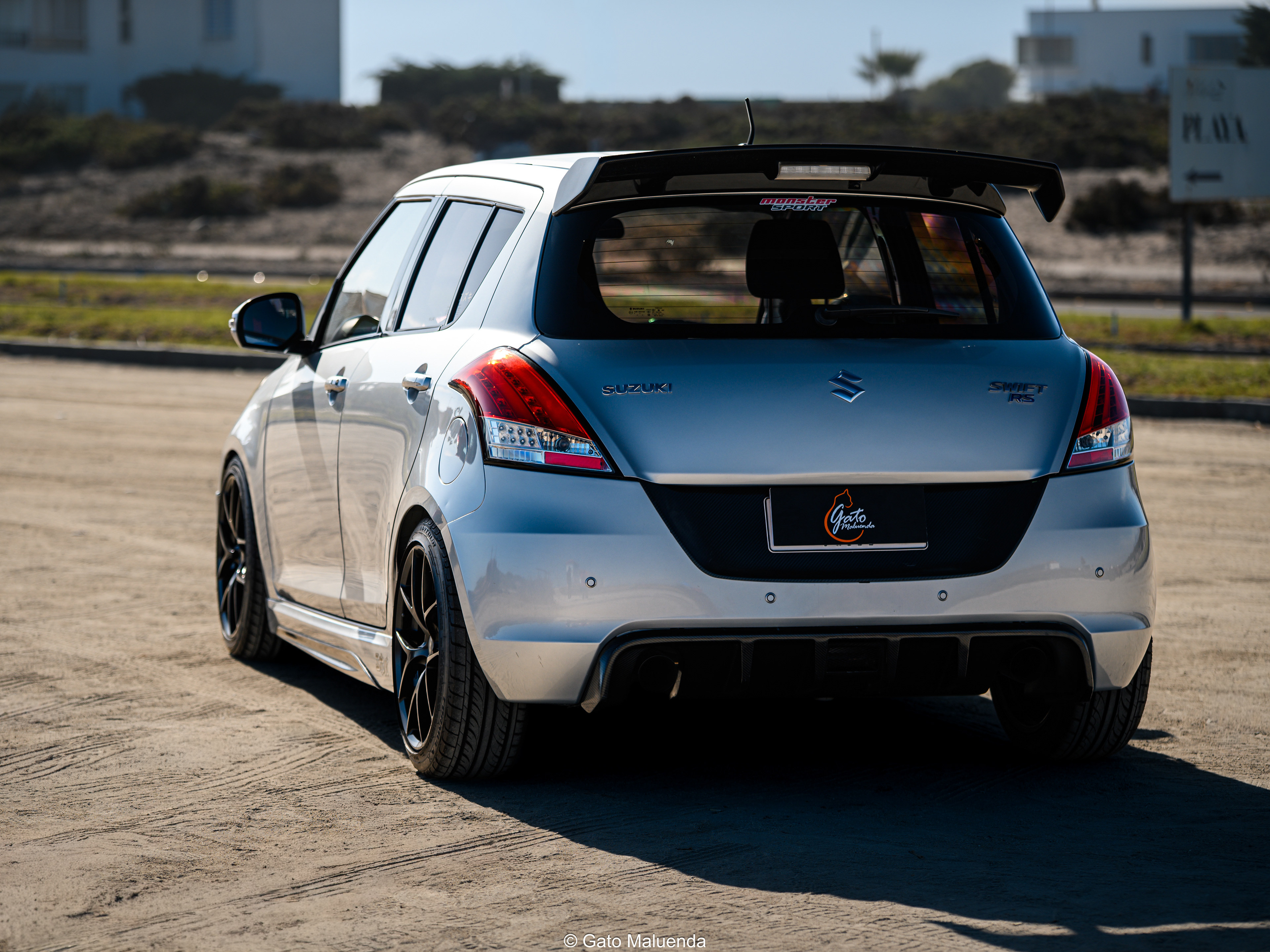
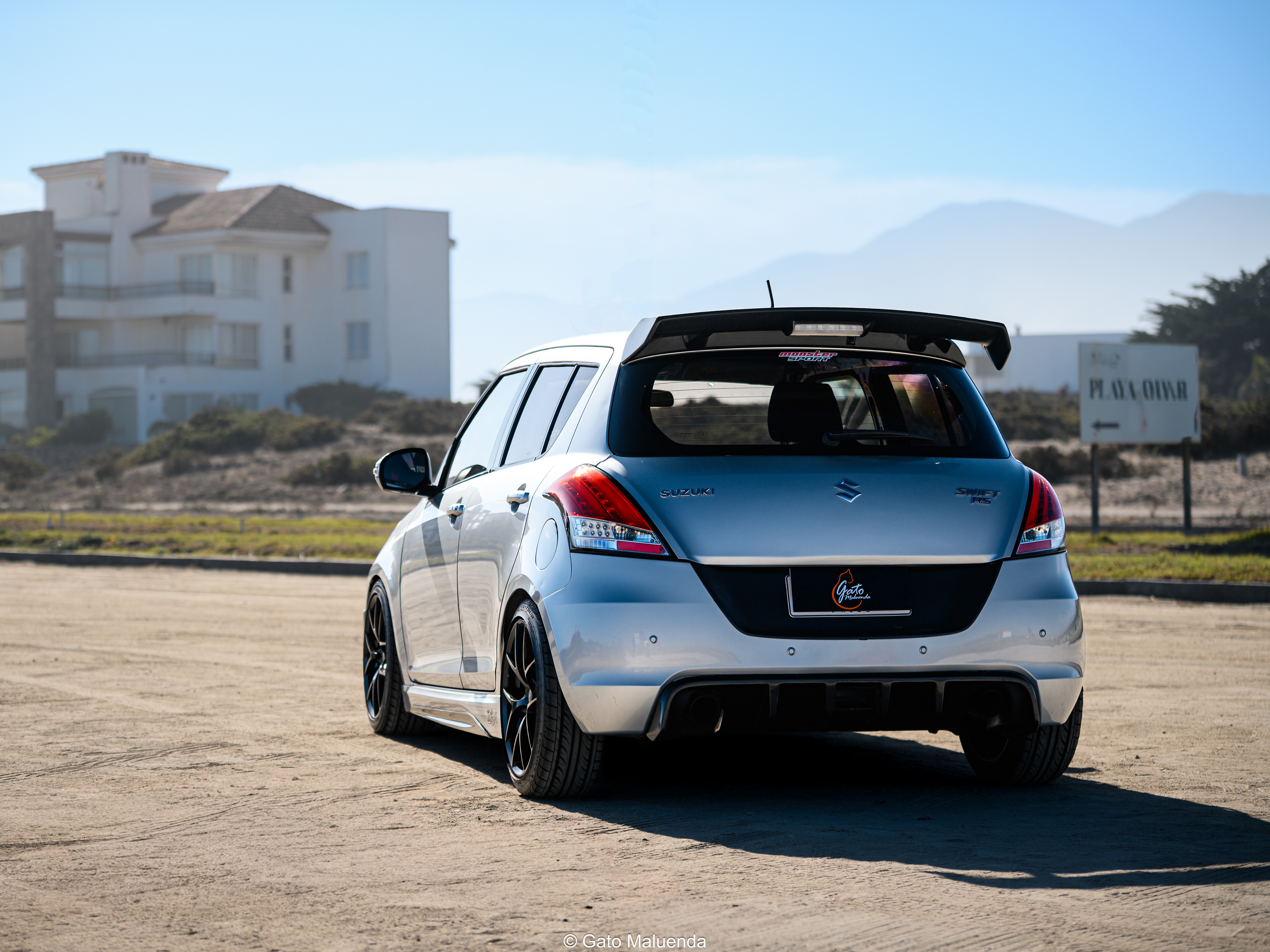
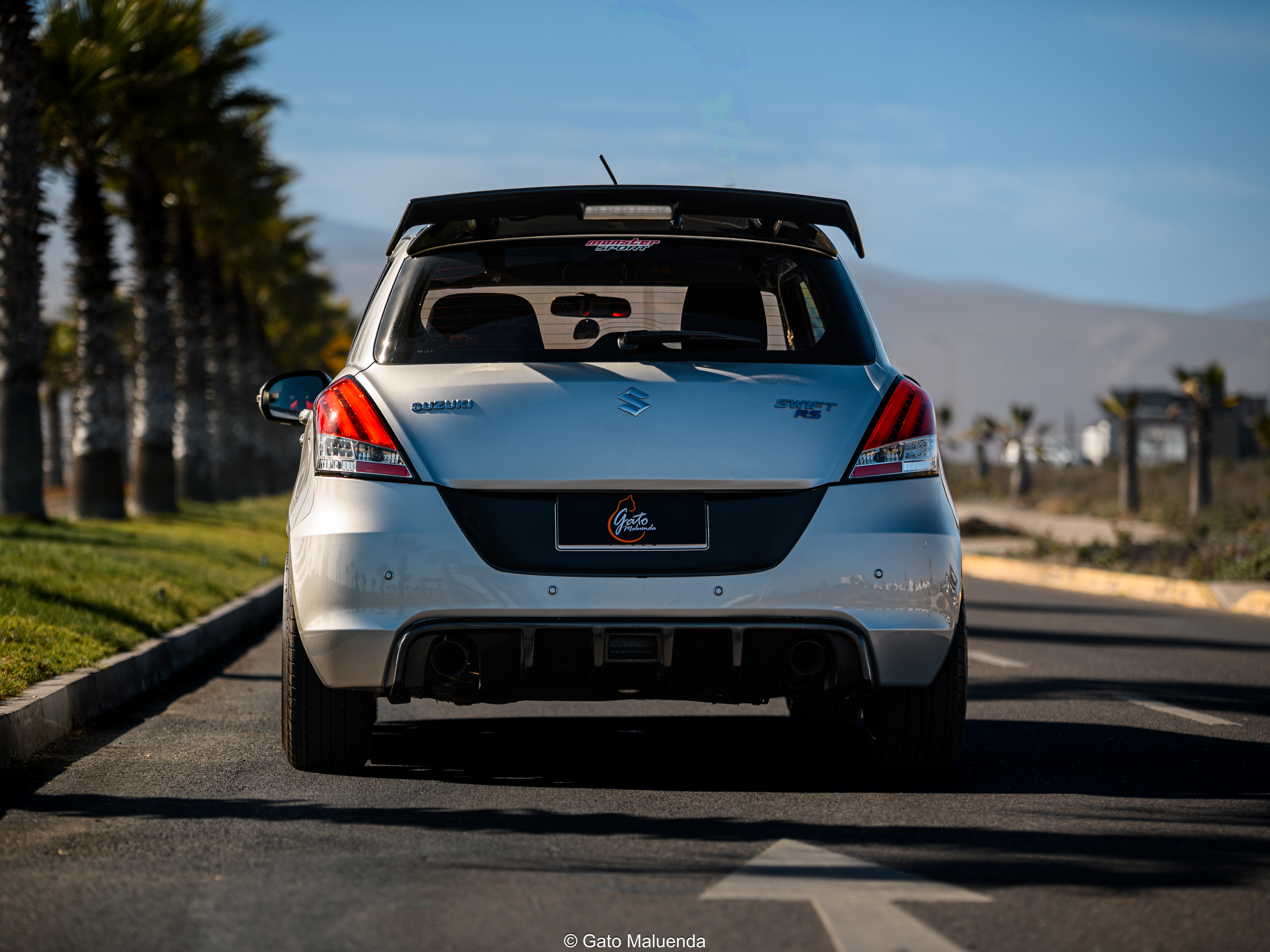
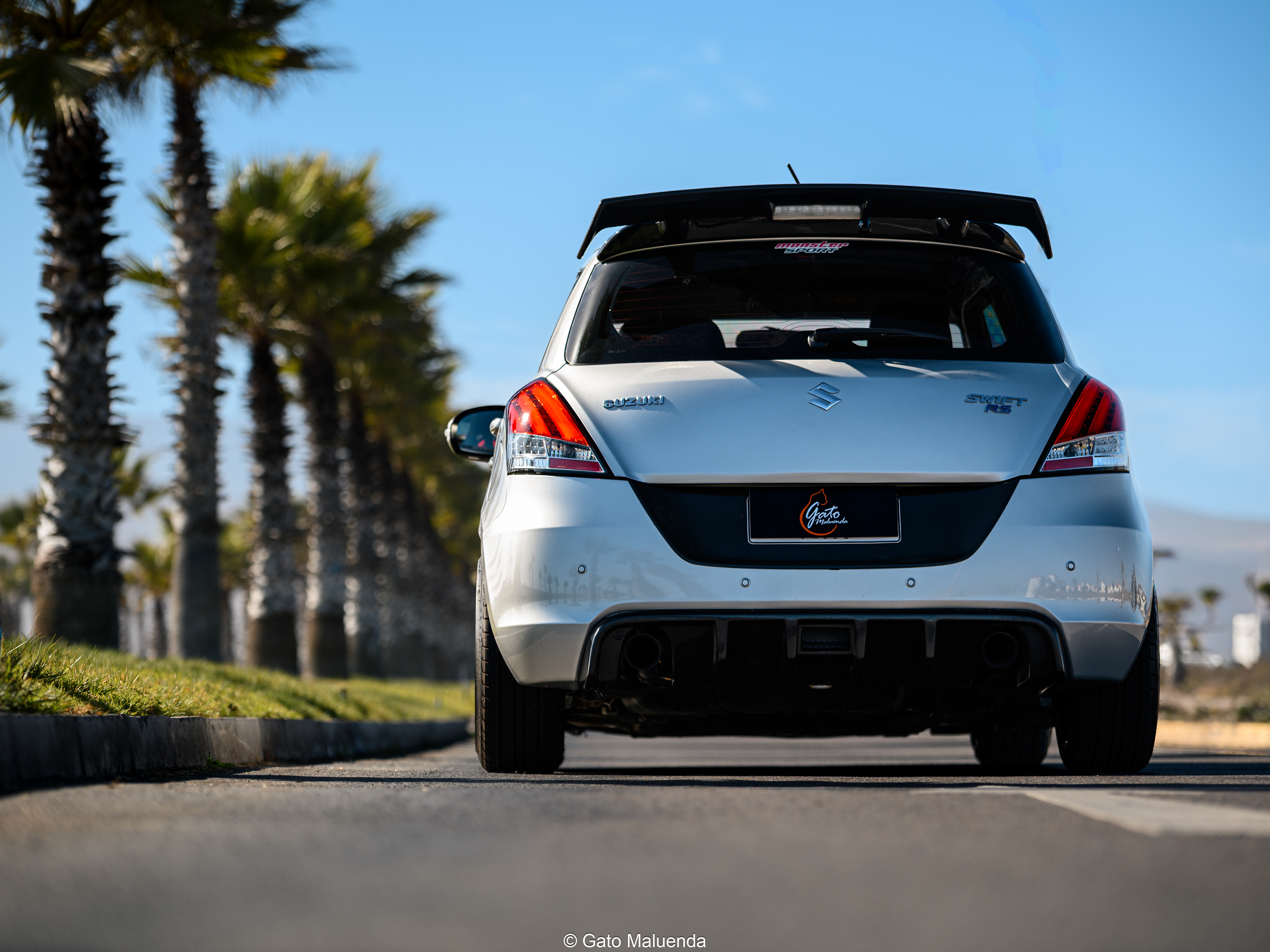
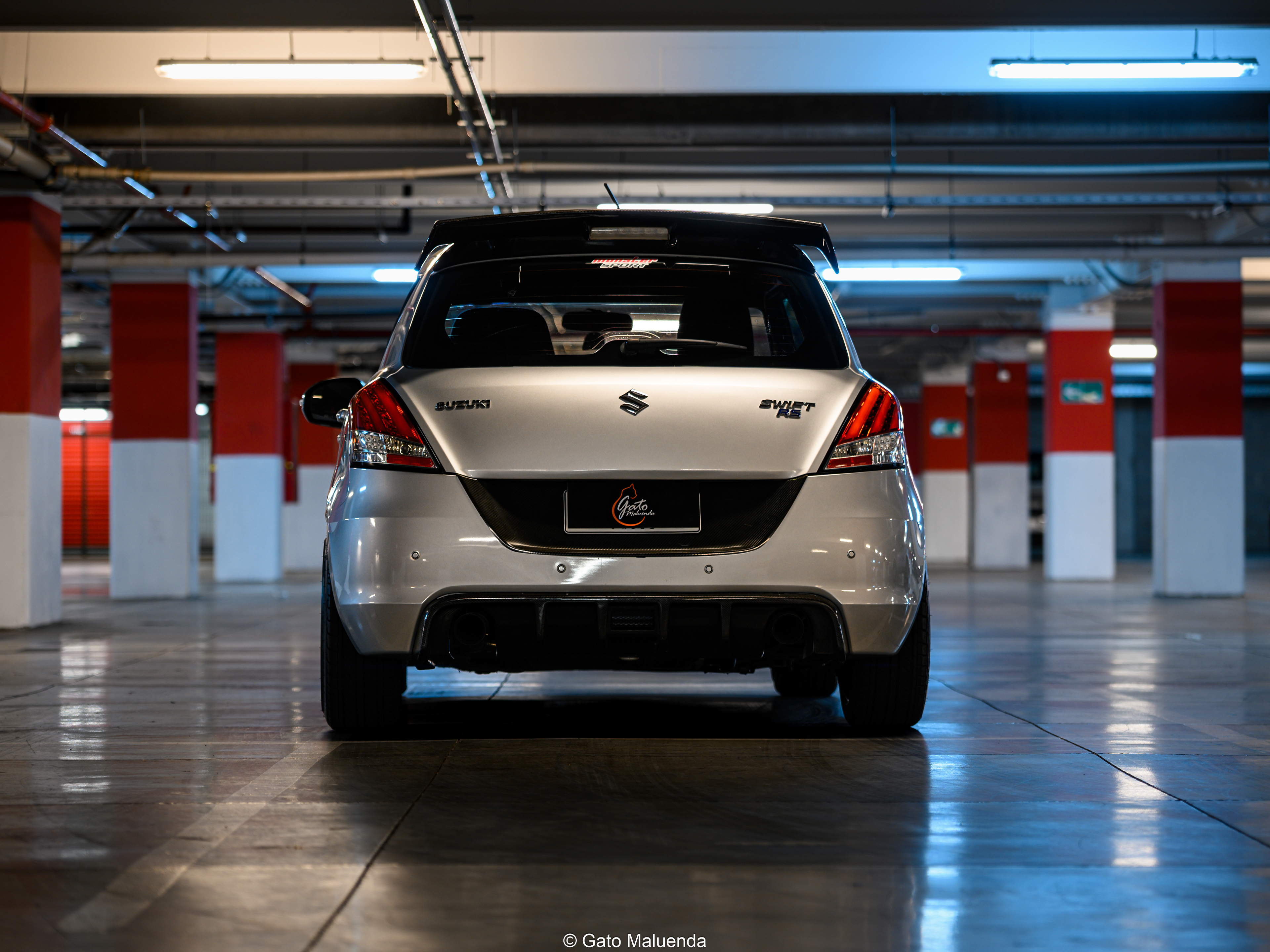
también equipa faldones con lips Monster Sport, alerón de fibra de carbono Carbon GT Monster Sport, parachoques trasero Swift Sport,
difusor Suzuki Works Kurume de fibra de carbono, embellecedor de patente también en fibra de carbono y focos traseros LED Mars Performance.
El frontal completo proviene de la versión RS japonesa. Su máscara frontal y capot son de fibra de carbono Monster Sport;
también equipa faldones con lips Monster Sport, alerón de fibra de carbono Carbon GT Monster Sport, parachoques trasero Swift Sport,
difusor Suzuki Works Kurume de fibra de carbono, embellecedor de patente también en fibra de carbono y focos traseros LED Mars Performance.
Por dentro, la idea es mucho menos decorativa y mucho más funcional. El interior fue alivianado por completo, y no estamos hablando simplemente de sacar unos asientos y listo. Estamos hablando de remover incluso la insonorización acústica. Una sola butaca Recaro Type TS-G,
cinturón de cuatro puntas Recaro, barra universal para cinturones, cubre piso Monster Sport y barra interior Beatrush.
Todo apunta a lo mismo: menos peso, más rigidez y mayor conexión con el auto.
cinturón de cuatro puntas Recaro, barra universal para cinturones, cubre piso Monster Sport y barra interior Beatrush.
Todo apunta a lo mismo: menos peso, más rigidez y mayor conexión con el auto.
Y créanme que se siente.
Después de años subiéndome a proyectos de circuito, track day, drag y drift, pocas veces había sentido un auto tan conectado al pavimento.
No desde el asiento del conductor, sino desde el lado del copiloto. Al pasar por un camino con arena fina, se podían escuchar los pequeños granos golpeando contra la carrocería, lanzados por las ruedas. Cada bache, cada unión del asfalto y cada imperfección del camino llegaba al habitáculo sin filtro, como si el Swift hubiese eliminado cualquier distancia entre el suelo y quien va dentro.
Eso, en un auto de calle, puede sonar incómodo. Y la verdad, lo es. Pero en este contexto, es parte de la gracia.
Porque este Swift no se siente aislado. Se siente despierto. Se siente liviano, rígido, directo.
Si desde el asiento del copiloto —instalado especialmente para esta sesión— ya transmite esa lectura del camino, cuesta no imaginar lo que debe sentirse ir manejándolo en pista, apoyar el auto en curva y cortar un piano con ese peso, esa suspensión y esa respuesta tan inmediata.
No desde el asiento del conductor, sino desde el lado del copiloto. Al pasar por un camino con arena fina, se podían escuchar los pequeños granos golpeando contra la carrocería, lanzados por las ruedas. Cada bache, cada unión del asfalto y cada imperfección del camino llegaba al habitáculo sin filtro, como si el Swift hubiese eliminado cualquier distancia entre el suelo y quien va dentro.
Eso, en un auto de calle, puede sonar incómodo. Y la verdad, lo es. Pero en este contexto, es parte de la gracia.
Porque este Swift no se siente aislado. Se siente despierto. Se siente liviano, rígido, directo.
Si desde el asiento del copiloto —instalado especialmente para esta sesión— ya transmite esa lectura del camino, cuesta no imaginar lo que debe sentirse ir manejándolo en pista, apoyar el auto en curva y cortar un piano con ese peso, esa suspensión y esa respuesta tan inmediata.
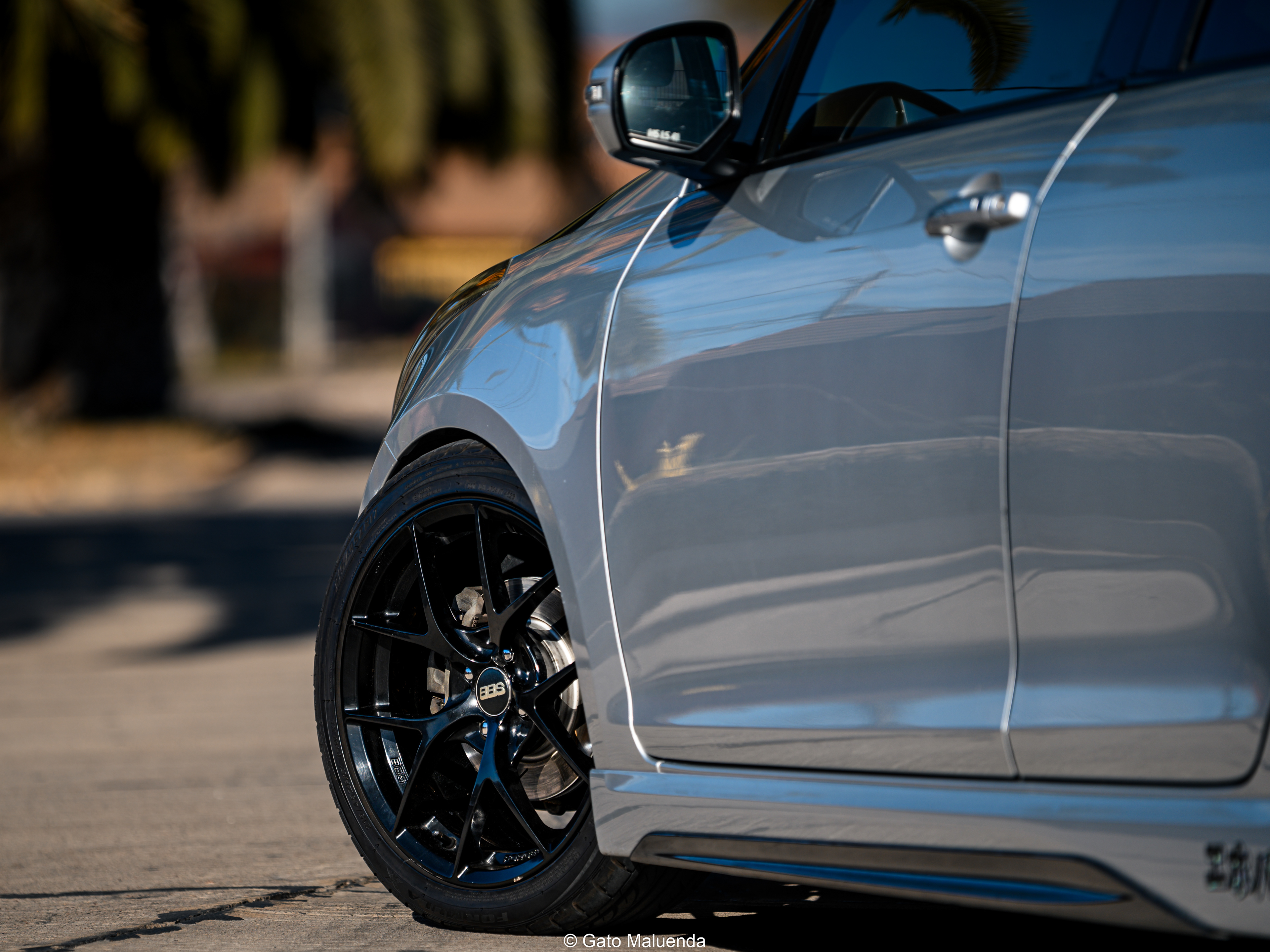
En dinámica, el Swift también dejó de ser un compacto de calle. Lleva discos delanteros ranurados Dixcel, pastillas Dixcel,
barras Cusco delanteras y traseras, barra interior Beatrush, coilovers Riaction regulables en altura y dureza,
bobinas HSP, inducción Zero 1000, línea completa y una puesta a punto cada vez más orientada a pista.
barras Cusco delanteras y traseras, barra interior Beatrush, coilovers Riaction regulables en altura y dureza,
bobinas HSP, inducción Zero 1000, línea completa y una puesta a punto cada vez más orientada a pista.
Su dueño lo resume sin vueltas: la modificación que más cambió el comportamiento no fue una sola pieza, sino el conjunto.
Rigidez, suspensión, llantas más pequeñas, semislicks y menor inercia rotacional.
Todo eso apareció especialmente en su segunda visita a Huachalalume, donde el auto empezó a mostrar realmente lo que podía hacer.
Rigidez, suspensión, llantas más pequeñas, semislicks y menor inercia rotacional.
Todo eso apareció especialmente en su segunda visita a Huachalalume, donde el auto empezó a mostrar realmente lo que podía hacer.
Sus tiempos ya hablan por sí solos: 1:15.970 en Huachalalume, con solo dos trackdays realizados,
y 48.644 en el Autódromo Villa Olímpica de Quilpué, en su única visita. No está compitiendo desde la potencia bruta,
sino desde el peso, la puesta a punto y la confianza.
y 48.644 en el Autódromo Villa Olímpica de Quilpué, en su única visita. No está compitiendo desde la potencia bruta,
sino desde el peso, la puesta a punto y la confianza.
Y ahí está el verdadero encanto del proyecto.
Este Swift no intenta ser algo que no es. No busca esconder su origen ni fingir que nació como un deportivo de alto calibre. Al contrario:
abraza su base humilde y la lleva mucho más lejos de lo esperado. Representa una idea simple, pero potente:
con poco, bien hecho, se puede hacer mucho.
abraza su base humilde y la lleva mucho más lejos de lo esperado. Representa una idea simple, pero potente:
con poco, bien hecho, se puede hacer mucho.
Para su dueño, este auto es una prueba personal de que incluso en la adversidad se puede avanzar.
Y para el automovilismo, una pequeña declaración de principios: no hacen falta 600 caballos, paddle shift
ni presupuestos absurdos para disfrutar de verdad un auto.
A veces basta con un chasis liviano, buen mantenimiento, piezas elegidas con intención, algo de actitud y muchas ganas de manejar.
Y para el automovilismo, una pequeña declaración de principios: no hacen falta 600 caballos, paddle shift
ni presupuestos absurdos para disfrutar de verdad un auto.
A veces basta con un chasis liviano, buen mantenimiento, piezas elegidas con intención, algo de actitud y muchas ganas de manejar.
Porque al final, lo que más disfruta de este Swift no son solo los números. Es sentirlo todo:
los detalles de la pista, el agarre en curva, el frenado, el punta-tacón y esa sonrisa difícil de explicar cuando un auto,
por pequeño que sea, empieza a sentirse vivo.
los detalles de la pista, el agarre en curva, el frenado, el punta-tacón y esa sonrisa difícil de explicar cuando un auto,
por pequeño que sea, empieza a sentirse vivo.
“Prefiero manejar un auto lento rápido, que un auto rápido lento.”
__________________________________________________________________________________________________________________________
__________________________________________________________________________________________________________________________
🇬🇧🇺🇸 The origins of automotive projects are a Pandora’s box. I suppose that is why they fascinate me so much.
Not all of them are born chasing lap times, absurd power figures, or impossible acceleration numbers. Many begin from something much simpler:
a solution, a necessity, a work tool, a way to move forward.
Not all of them are born chasing lap times, absurd power figures, or impossible acceleration numbers. Many begin from something much simpler:
a solution, a necessity, a work tool, a way to move forward.
That is how this Suzuki Swift GLX came into its owner’s hands during the pandemic. It was bought in Los Andes from its first and only owner,
with just 18,000 kilometers on the clock. The original plan had absolutely nothing to do with racetracks, modifications, or performance builds.
The plan was far more normal, far more routine: to use it for Uber during one of the most complicated periods we have experienced in recent times.
with just 18,000 kilometers on the clock. The original plan had absolutely nothing to do with racetracks, modifications, or performance builds.
The plan was far more normal, far more routine: to use it for Uber during one of the most complicated periods we have experienced in recent times.
And why wouldn’t it be? It was economical, reliable, easy to maintain, and well equipped. A nationally sold, Japanese-built hatchback with a naturally aspirated K12B 1.2-liter engine, a five-speed manual gearbox, and a simple recipe: low fuel consumption, reliability, and practicality.
But sometimes cars stay for reasons that do not appear on any spec sheet, and do not respond much to logic either.
With time came a stable job, the family grew, and the need for something more spacious planted the idea of selling it in its owner’s mind.
More than once, the Swift came very close to leaving. But by then, his family had already grown attached to it.
His wife and son always ended up stopping the sale.
The counterproposal was simple: the Swift would stay, but it would transform.
More than once, the Swift came very close to leaving. But by then, his family had already grown attached to it.
His wife and son always ended up stopping the sale.
The counterproposal was simple: the Swift would stay, but it would transform.
And with that, the journey began.
What started as a sportier look gradually took a much clearer and more aggressive direction, with a very specific inspiration:
the Monster Sport Swift RS N1. The goal was to keep the build focused on original, high-quality parts, reduce as much weight as possible,
and create a car with a functional identity, not just an aesthetic one.
the Monster Sport Swift RS N1. The goal was to keep the build focused on original, high-quality parts, reduce as much weight as possible,
and create a car with a functional identity, not just an aesthetic one.
Today, the car weighs 880 kg measured, more than 100 kg below its original weight, which was close to one ton.
Its engine is still the small naturally aspirated K12B 1.2-liter, but it now produces 115 hp at 6,200 rpm and 150 Nm of torque, measured on a dyno.
These are not astronomical numbers. They are not meant to impress anyone at a car meet. But in a car this light, they begin to tell a different story.
Its engine is still the small naturally aspirated K12B 1.2-liter, but it now produces 115 hp at 6,200 rpm and 150 Nm of torque, measured on a dyno.
These are not astronomical numbers. They are not meant to impress anyone at a car meet. But in a car this light, they begin to tell a different story.
On the outside, the project is built around a very particular combination of original Japanese parts.
The entire front end comes from the Japanese RS version. Its front grille and hood are Monster Sport carbon fiber pieces;
it also features Swift Sport side skirts with Monster Sport lips, a Carbon GT Monster Sport carbon fiber wing, a Swift Sport rear bumper,
a Suzuki Works Kurume carbon fiber rear diffuser, a carbon fiber license plate garnish, and Mars Performance LED taillights.
The entire front end comes from the Japanese RS version. Its front grille and hood are Monster Sport carbon fiber pieces;
it also features Swift Sport side skirts with Monster Sport lips, a Carbon GT Monster Sport carbon fiber wing, a Swift Sport rear bumper,
a Suzuki Works Kurume carbon fiber rear diffuser, a carbon fiber license plate garnish, and Mars Performance LED taillights.
Inside, the idea is far less decorative and far more functional. The interior has been completely stripped for weight reduction,
and we are not talking about simply removing a couple of seats and calling it a day. We are talking about removing even the acoustic insulation.
A single Recaro Type TS-G bucket seat, Recaro four-point harness, universal harness bar, Monster Sport floor mat, and Beatrush interior bar.
and we are not talking about simply removing a couple of seats and calling it a day. We are talking about removing even the acoustic insulation.
A single Recaro Type TS-G bucket seat, Recaro four-point harness, universal harness bar, Monster Sport floor mat, and Beatrush interior bar.
Everything points in the same direction: less weight, more rigidity, and a deeper connection with the car.
And believe me, you can feel it.
After years of getting into circuit, track day, drag, and drift projects, few cars have ever felt this connected to the pavement.
Not from the driver’s seat, but from the passenger side. While driving over a road covered with fine sand, you could hear the tiny grains being
thrown by the tires and hitting the bodywork. Every bump, every joint in the asphalt, and every imperfection in the road reached the cabin unfiltered, as if the Swift had removed any distance between the ground and whoever was inside.
Not from the driver’s seat, but from the passenger side. While driving over a road covered with fine sand, you could hear the tiny grains being
thrown by the tires and hitting the bodywork. Every bump, every joint in the asphalt, and every imperfection in the road reached the cabin unfiltered, as if the Swift had removed any distance between the ground and whoever was inside.
In a street car, that may sound uncomfortable. And honestly, it is. But in this context, that is part of the charm.
Because this Swift does not feel isolated. It feels awake. It feels light, rigid, direct. If from the passenger seat —installed especially for this photoshoot— it already delivers that kind of road feedback, it is hard not to imagine what it must feel like to drive it on track, load it into a corner, and clip a curb with that weight, that suspension, and that immediate response.
Dynamically, the Swift has also stopped being just a compact street car. It runs Dixcel slotted front brake discs, Dixcel brake pads,
front and rear Cusco bars, a Beatrush interior bar, Riaction coilovers adjustable in height and damping, HSP high-output coils,
Zero 1000 intake, full exhaust, and a setup increasingly aimed at track use.
front and rear Cusco bars, a Beatrush interior bar, Riaction coilovers adjustable in height and damping, HSP high-output coils,
Zero 1000 intake, full exhaust, and a setup increasingly aimed at track use.
Its owner puts it simply: the modification that changed the car’s behavior the most was not one single part,
but the combination of many things. Rigidity, suspension setup, smaller wheels, semi-slick tires, and lower rotational inertia.
All of that came together especially during its second visit to Huachalalume, where the car truly began to show what it could do.
but the combination of many things. Rigidity, suspension setup, smaller wheels, semi-slick tires, and lower rotational inertia.
All of that came together especially during its second visit to Huachalalume, where the car truly began to show what it could do.
Its times already speak for themselves: 1:15.970 at Huachalalume, after only two track days,
and 48.644 at Autódromo Villa Olímpica de Quilpué, on its only visit there.
It is not competing through brute power, but through weight, setup, and confidence.
and 48.644 at Autódromo Villa Olímpica de Quilpué, on its only visit there.
It is not competing through brute power, but through weight, setup, and confidence.
And that is where the real charm of this project lives.
This Swift is not trying to be something it is not. It does not hide its origins or pretend it was born as a high-caliber sports car.
On the contrary, it embraces its humble base and takes it much further than expected. It represents a simple but powerful idea:
with little, done properly, you can do a lot.
On the contrary, it embraces its humble base and takes it much further than expected. It represents a simple but powerful idea:
with little, done properly, you can do a lot.
For its owner, this car is a personal reminder that even through adversity, you can move forward.
And for the automotive world, it is a small declaration of principles:
you do not need 600 horsepower, paddle shift, or absurd budgets to truly enjoy a car.
Sometimes all you need is a light chassis, proper maintenance, carefully chosen parts, some attitude, and a genuine desire to drive.
And for the automotive world, it is a small declaration of principles:
you do not need 600 horsepower, paddle shift, or absurd budgets to truly enjoy a car.
Sometimes all you need is a light chassis, proper maintenance, carefully chosen parts, some attitude, and a genuine desire to drive.
Because in the end, what its owner enjoys most about this Swift is not just the numbers. It is feeling everything: the details of the track,
the grip through the corners, the braking, the heel-and-toe downshifts, and that hard-to-explain smile that appears when a car,
no matter how small, begins to feel alive.
the grip through the corners, the braking, the heel-and-toe downshifts, and that hard-to-explain smile that appears when a car,
no matter how small, begins to feel alive.
“I’d rather drive a slow car fast than a fast car slow.”